


Participating in advice
Condition 3: People feel understood before they are advised
Participation in advice begins when people stop wondering whether advice is for someone else and start believing it is for them.
Our interviews found clients want advisers to understand their lives before discussing financial products. The money conversation only makes sense in the context of what people are trying to achieve.

“Often they jump too quickly into the technical, and I’m led to think, ‘you don’t understand me. You haven’t even let me explain what I want’.”
Female advised client
Women in our research describe wanting conversations that begin with life rather than products. This isn’t just a female preference. It reflects a broader shift in what people want from advice and advisers recognise it: discovery meetings today are more about, “let’s get to know each other”, not bringing along the spreadsheet.
But the transition is far from complete.
Almost half of advised clients do not fully agree that the advice they receive reflects their personal goals and priorities and female clients are less likely than male clients to feel known as an individual, rather than primarily as one half of a couple.
Male clients are more likely to feel known as an individual compared to female clients
Question: To what extent do you agree with the following statements? (% strongly + slightly)
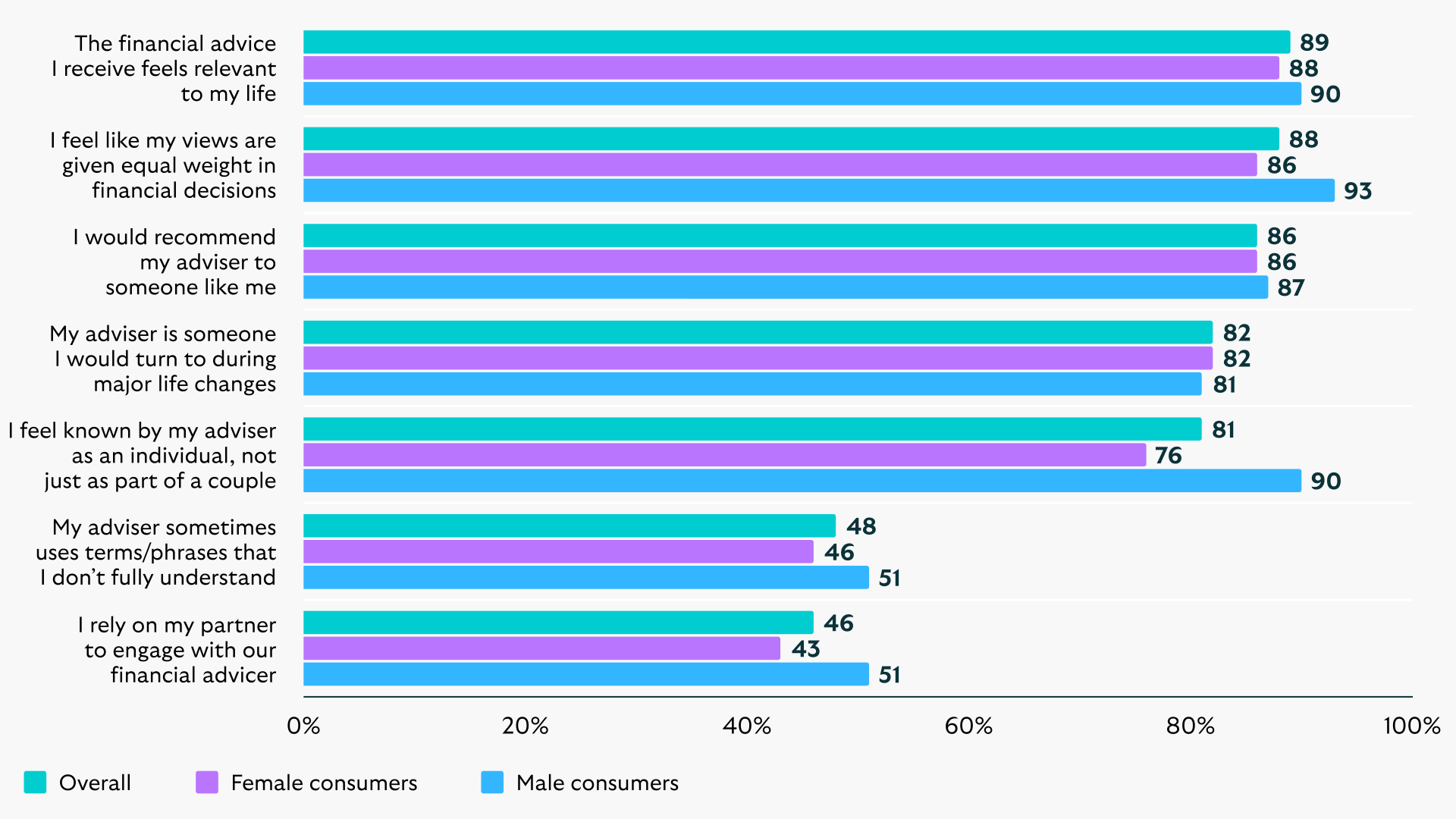
Through fact-finding and discovery meetings, advisers can know a great deal about their clients – their assets, pension values, tax position and objectives.
Participation really grows when clients feel known.
Condition 4: People can participate without becoming experts
One of our strongest research findings is that many people believe participation in advice requires expertise.
They assume they should understand pensions and investments before speaking to an adviser and have the right numbers at their fingertips before an initial meeting. If they don’t, they’re reluctant to participate at all.
Women describe this particularly frequently, but many consumers carry an underlying belief that they should know more before they ask for help.
The hidden assumption
The financial advice profession has talked extensively about improving financial education, financial literacy and financial confidence. These are important and useful goals. But they also might unintentionally reinforce a quiet assumption that many consumers hold: that financial advice is something you need to prepare for.
The result is that questions remain unasked, and the participation is performative rather than genuine.
“When they have arranged to meet for an hour and I’m asking GCSE maths questions, this is not what the meeting is about, to tell me how basic investments work. I should really try and work this out by myself rather than asking him annoying questions while I’m here. That’s why I don’t tend to ask as many things, and therefore don’t understand as much.”
Female client in an advised couple

Five modes of participation
There is no single right way to participate in advice.
The research reveals distinct preferences in how clients want to participate in advice, and people move between them as life changes. A delegator may become a learner after a bereavement. A passenger may become the primary decision-maker overnight.
How do these show up in your client book – and when?
The Passenger
‘I’m here… but this relationship isn’t really mine yet.’
What this looks like:
- Present but quieter in meetings.
- Often part of a couple.
- Needs moments in the relationship that they can own – a question just for them.
“At the moment my husband goes to all the meetings, and they’re just about the money. Maybe our adviser would be different if it was just me.”
The Active Delegator
‘I trust you. Just don’t leave me behind.’
What this looks like:
- Values reassurance over detail.
- Happy to hand over the administration.
- Wants confidence, not complexity.
- Appreciates clear, simple updates that everything is on track.
“The financial world is not my job. I just want the best use of my money.” “She does everything, all the admin even filling in my forms because she knows I won’t do it. It’s a big trust thing for me.” “If there’s something someone else can take off my plate, I’m happy.”
The Learner
‘Help me understand without making me feel clueless.’
What this looks like:
- Asks lots of questions.
- Wants plain English.
- Builds confidence through understanding.
“I want to be educated and informed.” “I want to really understand it before I invest. Clear, basic language and checking in if I need anything explained is what builds my trust.”
The Collaborator
‘Start with my life, not my portfolio.’
What this looks like:
- Wants to feel heard.
- Expects advice to be personalised.
- Values discussion before recommendations.
“You need to let me explain what I want and build the relationship.” “I would like to feel that I’ve been heard, listened to and that whatever agreement we come to, it’s personal to me.”
The Validator
‘Challenge my thinking.’
What this looks like:
- Arrives with ideas already formed.
- Values expertise over agreement.
- Wants honest, well-reasoned advice.
“I always take advice but I do my own research as well.” “Sometimes I turn the table and ask, if this was your money, how would you arrange it?”
The Active Delegator
‘I trust you. Just don’t leave me behind.’
What this looks like:
- Values reassurance over detail.
- Happy to hand over the administration.
- Wants confidence, not complexity.
- Appreciates clear, simple updates that everything is on track.
“The financial world is not my job. I just want the best use of my money.” “She does everything, all the admin even filling in my forms because she knows I want do it. It’s a big trust thing for me.” “If there’s something someone else can take off my plate, I’m happy.”
The Learner
‘Help me understand without making me feel clueless.’
What this looks like:
- Asks lots of questions.
- Wants plain English.
- Builds confidence through understanding.
“I want to be educated and informed.” “I want to really understand it before I invest. Clear, basic language and checking in if I need anything explained is what builds my trust.”
The Collaborator
‘Start with my life, not my portfolio.’
What this looks like:
- Wants to feel heard.
- Expects advice to be personalised.
- Values discussion before recommendations.
“You need to let me explain what I want and build the relationship.” “I would like to feel that I’ve been heard, listened to and that whatever agreement we come to, it’s personal to me.”
The Validator
‘Challenge my thinking.’
What this looks like:
- Arrives with ideas already formed.
- Values expertise over agreement.
- Wants honest, well-reasoned advice.
“I always take advice but I do my own research as well.” “Sometimes I turn the table and ask, if this was your money, how would you arrange it?”
The Passenger
‘I’m here… but this relationship isn’t really mine yet.’
What this looks like:
- Present but quieter in meetings.
- Often part of a couple.
- Needs moments in the relationship that they can own – a question just for them.
“At the moment my husband goes to all the meetings, and they’re just about the money. Maybe our adviser would be different if it was just me.”
The responsibility doesn’t sit solely with clients to know more, ask more or become more confident. It sits with advisers to design conversations that reduce the need for prior knowledge, and make it easier for every client to participate in a way that works for them.
What looks like a lack of interest might simply be a lack of connection between financial advice and what matters most to that person.

Condition 5: Every voice is heard
Many households have one financial plan.
Not everyone feels equally involved in creating it.
One of the clearest participation gaps uncovered in this research exists not between advised and non-advised consumers, but within existing client relationships.

“So many women find that they go into a meeting with their husbands, and the male adviser does not communicate with them whatsoever. Regularly, women feel they’re not being heard. It’s a really, really common criticism that a lot of clients say when they’ve been somewhere else.”
Female adviser, 5-10 adviser firm
This is often the woman, but not always:
“We call it a dominated relationship, but it might mean reaching out to the man.”
Female adviser, 5-10 adviser firm
The challenge for advisers is identifying where this dynamic exists and addressing it can be complicated.
Our adviser survey data show that just over half (55%) say their primary contact is jointly the female and male partner, in roughly equal proportion. In over a quarter of cases, the male is the primary named partner in the relationship, and the female is the lead party in just 3% of advised couples.
Being present isn’t the same as being heard, though actively choosing to delegate is also a valid choice.
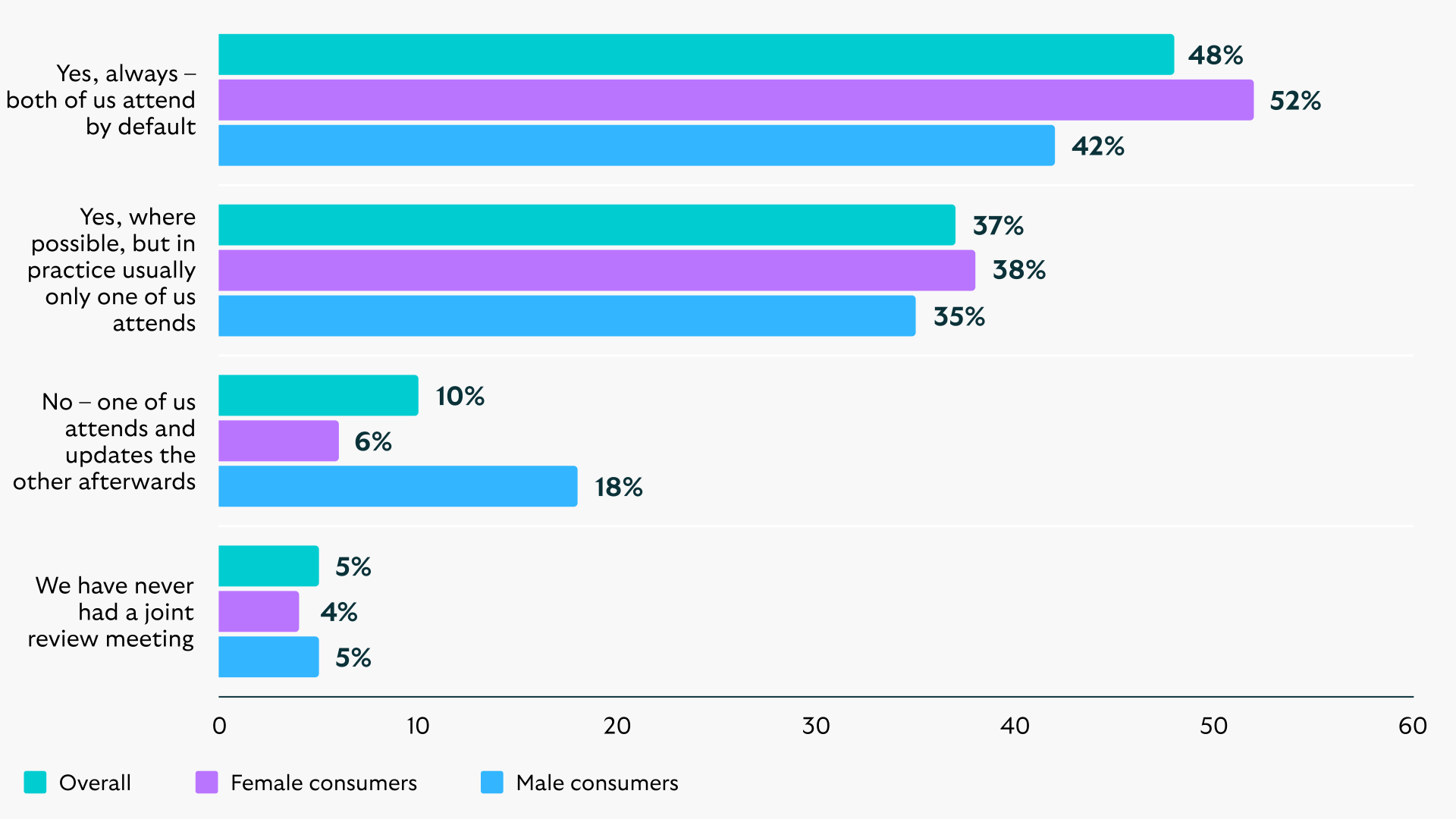
Nearly half of advised couples attend meetings together; for a third it tends to be one or the other
Question: Are your financial advice annual review meetings attended by both you and your partner?
This matters more now
Women control a growing share of wealth and assets are on the move between spouses and generations.
April 2027’s changes to inheritance tax on unused pensions will bring many families into estate planning conversations for the first time.
In many cases, the person ultimately making decisions about inherited wealth may not be the person who has historically led in conversations with the adviser.
Aside from the spouses, beneficiaries can also be passengers in the advice relationship, and it will often be adult children who receive a large inheritance tax bill and potentially an income tax one on top. Just over a quarter (26%) of consumers say their adult children are not involved at all in financial planning or meetings.
The opportunity for your firm
Participation is commercially valuable. Clients who feel understood are more likely to consolidate assets with the firm, follow recommendations and become advocates. Firms that recognise different participation styles, and design conversations accordingly, will help more existing and potential clients participate confidently. One of the largest growth opportunities in advice may already exist within firms’ existing client banks.
What happens when the quieter voice suddenly becomes the only voice?
What you can do, tips from other advice firms
- Spending longer understanding life before discussing products. 37% of advisers say time saved through AI has been reinvested into time with existing clients.
- Removing the need for confidence before participation: “If this isn’t making sense, that’s my job, not yours.” “Some clients like the detail; others prefer the headlines; what works best for you?”
- Making switching adviser within the firm easy and normal, so every client finds someone who ‘speaks their language’.
- Coaching advisers in soft skills: over half of advisers work for firms providing this formally or informally.
- Scheduling reviews with both partners by default and holding deliberate one-to-one conversations with each: “Pick up the phone. Say, ‘I don’t think I’ve heard your opinion on the financial plan.’”
- Identifying household passengers before major life events force engagement.


