


Getting into advice
Condition 1: People have a clear route into advice
This chapter explores the friction that exists between recognising a need for advice and actually beginning the journey.
Just over a quarter (26%) of non-advised consumers1 in our survey (with at least £100,000 of investable assets) have considered taking financial advice but have never actually spoken with a financial adviser.
Advice remains largely invisible to people outside existing networks.
Most clients still arrive through referrals. 62% of advised consumers found their adviser through personal or professional referrals, while only 4% found them through online search.
People outside existing networks often don’t know:
- How to find an adviser.
- What advisers actually do.
- What the first meeting looks like.
“There isn’t a crib sheet that can help you find out what kind of financial advisers there are, or to understand a bit more about it.”
Female non-advised consumer
These two conversations in our structured interviews really highlight the issue – and if we weren’t committed to anonymity, we’d love to introduce this consumer to this adviser having heard both their views.
When asked what would attract this consumer (with £250k+ of investable assets) to an initial meeting with an adviser, she replied:

“To feel like it could be an open conversation, where the first meeting is not about the money. I just don’t think I could jump straight in at the deep end because I don’t get it and I would have so many questions. And maybe it starts with me saying what I want, rather than what I’ve got.”
Female non-advised consumer
She didn’t know such a meeting could be a possibility. But this adviser does precisely that:
“I personally spend most of my first meetings just chatting to clients about their personal situation. I think it’s important to really understand the client. I met a client last week who has just lost her husband and we spent maybe 40 minutes of an hour-long call on, ‘how are you finding it?’, ‘do you have family nearby’, and just talking about life rather than finances. I think that’s what she needed in that first meeting.”
Female adviser, 5-10 adviser firm

Condition 2: People feel that advice is for them
Finding advice is the first hurdle. People also need to believe that financial advice is designed for someone like them.
Many of the women we interviewed described feeling that financial advice is intended for somebody else:
- Someone wealthier
- Someone more knowledgeable
- Someone who had always been interested in money
- Someone with a more straightforward career path and more ‘certain numbers’
- Someone with a “more exciting financial profile”
Others worried that their circumstances were too messy, too uncertain, or too basic to justify advice, yet they go on to describe large amounts of money sat in current accounts, or shared household finances that sum up to millions.
“They’re going to want me to give a definite number but my salary is unpredictable.”
Female non-advised consumer
Advisers tell us it’s not just women. For some men too, advice can feel like, “an elite service for the very rich”.
73% of advice firms have a male-skewed adviser population.

“It’s who the market’s always been aimed at – old white guys being advised by old white guys. My stereotypes of people in financial services are starchy and unapproachable.”
Female non-advised consumer
The financial planning profession has changed dramatically over the past twenty years, and the stereotype may be unfair. But stereotypes influence behaviour.

Representation matters, but it isn’t the whole story
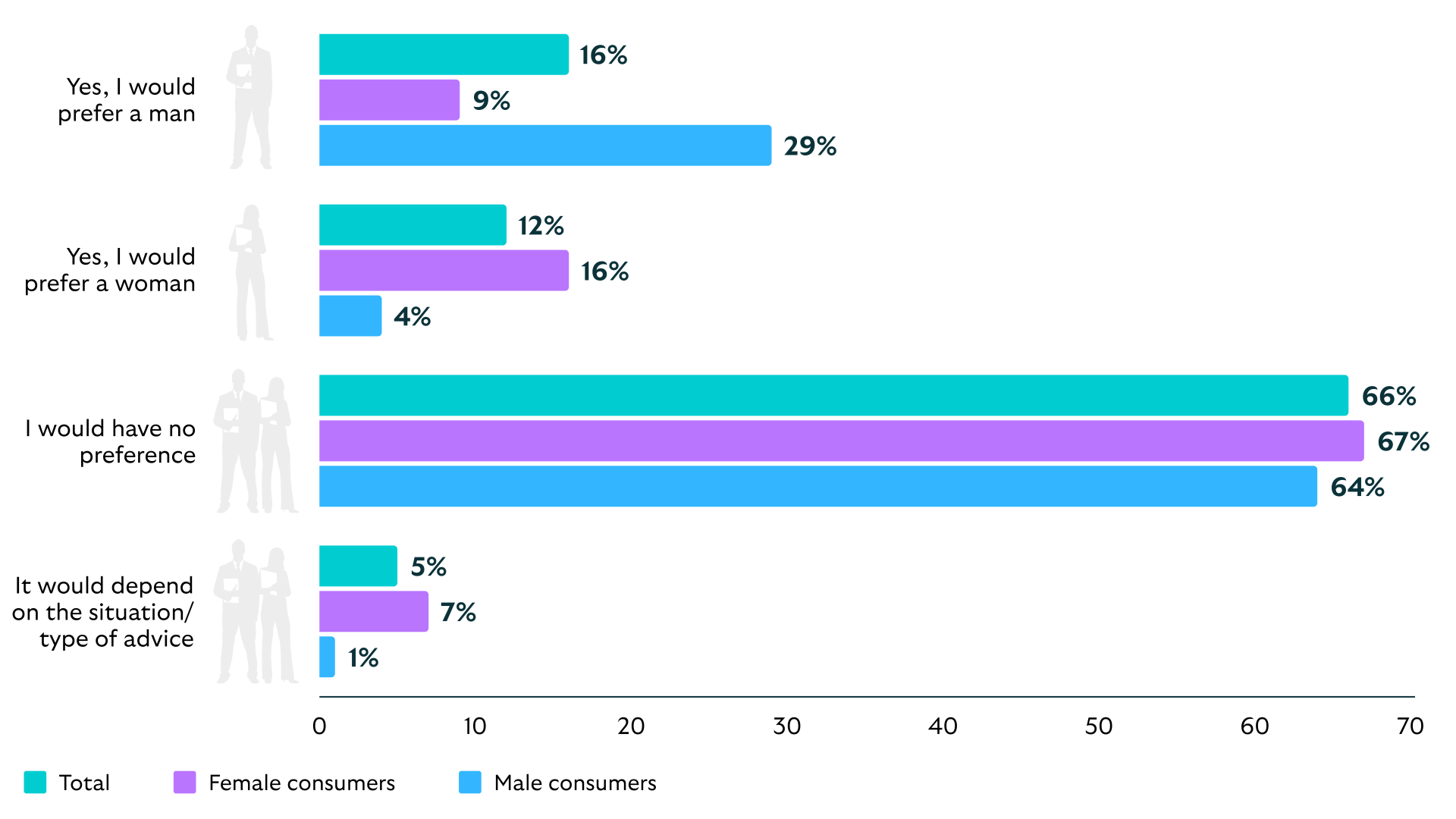
Our survey found that over half of female clients work with a female adviser, while most male clients work with a male adviser (see figure 1). Women are also more likely than men to say they would prefer a female adviser (figure 2).
Figure 1: Over half of women have a female adviser; in contrast most men have a male adviser
Question: Which of the following describes the gender of your financial adviser?
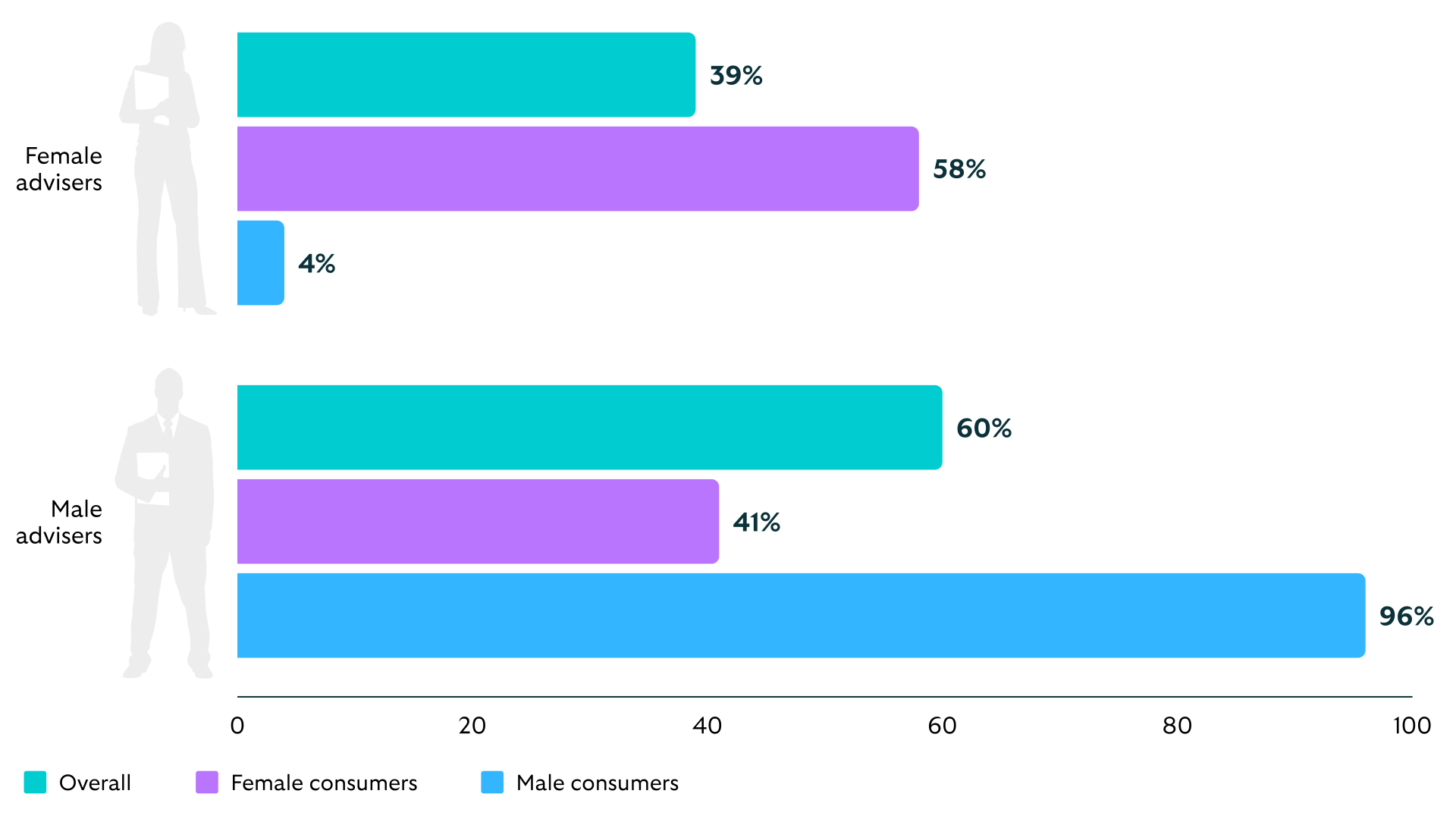
Figure 2: The majority of consumers say they have no preference for gender, but men are more likely to want a male adviser
Question: If you were choosing a financial adviser, assuming identical qualifications and experience, would you have any preference on the adviser’s gender?

“Often the people I’m speaking to are men. They seem to be late 40s, early 50s, very articulate, well-spoken men. That’s not me. So how can they possibly advise what’s best for my money?”
Female non-advised consumer
“I think I would immediately feel they know me, because they’re women, they understand what it’s like to be a woman. There’s a lot more relatability there… I think women have more aligned lifestyles to be able to have that understanding”
Female advised client


“They fall at the first hurdle because somebody doesn’t explain it in a way they can understand, or they don’t understand the challenges of maybe working full time and having small children and trying to juggle all of those things and the mental load that a lot of women predominantly carry. I just think there’s a real need for female advice and female advisers.”
Female adviser, 5-10 adviser firm
Two thirds of consumers have no stated gender preference for their adviser. Representation is only one part of the picture. In interviews, consumers tell us that seeing someone who feels relatable helps them feel more comfortable engaging.
“I get warmth when I get my hair cut. Something similar is missing from financial advising. I would love to find an organisation that understands where I would be coming from. I want to know that I’d be understood.”
Female non-advised consumer

People don’t necessarily look for someone who looks like them. They do look for evidence that advisers understand people like them.
The opportunity for your firm
People can’t become clients if they don’t know how to start, how to choose an adviser or what to expect. If advice feels exclusive, technical or built for a different audience, potential clients are less likely to begin the journey at all. Future growth depends not only on attracting clients but on making it easier to become one. Broadening participation doesn’t necessarily mean broadening the target market: it might mean broadening who feels welcome within it.
What you can do, tips from other advice firms
- Reducing the friction between recognising a need and starting a conversation for example by publishing ‘how to choose an adviser’ crib sheets and explaining what to expect.
- Sharing a broader range of client stories and life experiences: “Paint a picture for me of what I’m missing out on.” (Consumer)
- Niching by occupation or life stage: “It totally bridges the gap. We’re well known for this”.
- Creating lower-pressure first conversations that begin with people’s lives, not their money.
- Reviewing websites and client-facing material for language that could push any demographic away.
- Building diverse adviser teams – diversity in style of engaging, not just in physical factors:

“Within the 25 or so advisers we have, there will be some that are far more comfortable just talking about the numbers. Others have always felt more comfortable talking about the life stuff, because that’s what motivates them.”
Male adviser, 25-30 adviser firm


