


Advice through life
Condition 6: Advice adapts to real life transitions
What would it look like if advice adapted to life before life created financial problems?
Imagine this becoming as routine a financial planning conversation as retirement:
A couple decide to start a family and book an appointment with their financial adviser, not because they have money to invest or a pension to consolidate, but because one of the biggest financial decisions of their lives is about to begin.
Together they explore the cost of raising a child (according to MoneyHelper, the basic cost of raising a child until the age of 18 in the UK is £165,872). Then there’s the impact on at least one parent’s career, for a period of time, and probably on their pension contributions during that time. The adviser helps them model it through, and discuss their priorities, in terms of their life and their finances.
Do they, as a couple, want to adjust their assets and contributions to recognise the contribution of the parent who takes the lead role in parenting (usually the mother, but not always) so that she doesn’t end up disadvantaged financially? Does the adviser model various scenarios for them?
Maybe the adviser runs a seminar and the couple get to meet other advised couple parents. After all, most people who have had children will attest that they really didn’t know quite what was on the other side of this momentous life event until they’d lived through it. What questions would they have asked earlier if they could?
This scenario sounds a bit wild and unlikely. Is it? Why?

“If you’re going to have a baby, that’s one of the most expensive things you’ll ever do in your life and it lasts decades. You need to blend around that. To me it’s obvious, but to the people we meet, they’re just living their lives. These aren’t financial planning topics, this is life. This is what I’m doing. It’s about elevating the financial planning to being life.”
Female adviser, 5-10 adviser firm
“When you’ve got a couple approaching retirement at the same time, the main differential with women is their pension won’t be as big. You’ve gone through the journey together and your pension is lower because you’ve worked part-time, taken time out from work to have the children.”
Male adviser, 250+ adviser firm

This is what closing the participation gap could look like. Advice that arrives not just when someone retires or inherits wealth, but when life changes in ways that will shape their future finances for decades to come.
Another scenario:
A couple have grown up kids, but their own parents are struggling with declining health. One person in the couple, not always but most often the lower earner, and most often the woman, needs to shift to working part time to help out more.
Do they make an appointment to discuss this life change with their adviser? Or do they wait until they need to finance a care home? According to carehome.co.uk, the UK average weekly cost runs to £1,298 for residential care and £1,535 for nursing care, and considerably more of course for specialist or premium facilities.
A couple of our adviser interviewees for this project raised menopause as another significant life event, and of course this one only directly impacts women. According to the NHS, 45% of women felt that menopausal symptoms (and there can be 70 or more of those), had a negative impact on their work. Individual experiences vary enormously, but some women will scale back hours, struggle with confidence and tiredness, and perhaps consider an earlier retirement.
Retirement remains the organising principle around which much of financial advice is structured. It is a well-understood advice event, usually accompanied by clear processes, established conversations and recognised planning needs.
But clients’ lives are becoming increasingly non-linear and retirement is not the only major transition shaping people’s lives. Career breaks, caring responsibilities, divorce, bereavement, blended families, parenthood and phased retirement all feature prominently in clients’ lives, and many of these have profound and lasting financial consequences.
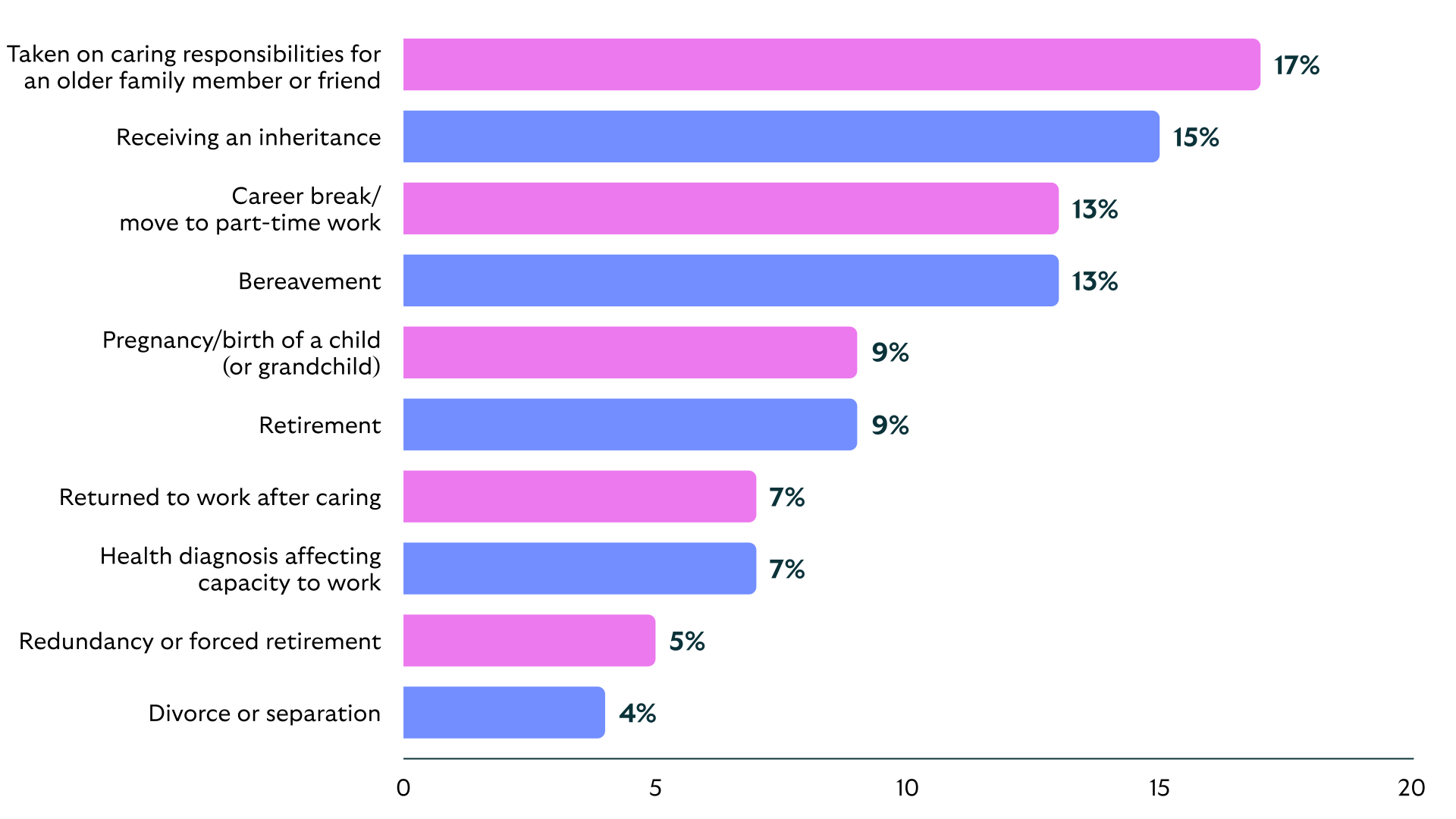
The most common life event for clients is taking on caring responsibilities, followed by inheritance and a career break/move to part-time work
Question: Have you or anyone in your household experienced any of the following significant life events in the last 3 years?
Advisers are most confident supporting inheritance and retirement, and least confident supporting clients who are caring for a dependent or child or returning to work after caring
Question: How confident are you in supporting clients with each of the following significant life events?

Over a quarter of advisers have no defined process for significant life events, and consumers say they would most likely raise a life event themselves (43%) or it comes up at the annual review (36%). 13% don’t bring it up at all.
Life doesn’t happen annually
Only 35% of advisers believe the traditional annual review cadence is broadly the right model, although when offered alternatives, nearly half of clients still prefer it. Newer advisers with more capacity told us they like to check in quarterly:

“Even if it’s just a one-liner email or a quick call, ‘is everything okay?’, ‘has anything changed?’, because that opens the door. Sometimes they don’t realise they need to tell you they’ve had a baby, they’ve changed jobs, their death-in-service with that job no longer exists.”
Female adviser, 5-10 adviser firm
Condition 7: Clients leave meetings with greater confidence
The first six conditions for meaningful participation focus on helping people enter, engage with, and remain involved with financial advice.
But what should happen as a result?
The purpose of financial advice is to help people make better decisions and feel more capable and confident in navigating their financial lives. Consumers tell us they want reassurance, clarity, peace of mind and protection from mistakes. They don’t necessarily want financial knowledge or expertise.
“You empower clients by speaking to them in a way that they understand. Not baffling them.”
Female adviser, 5-10 adviser firm
On the whole, advised consumers in our survey report a good level of satisfaction with the recommendations, support, communication and value for money they receive from their adviser.
Men and women overall are remarkably similar in their responses, so we can’t say that women are systematically less satisfied with financial advice than men.
Women who have a direct relationship with their adviser appear to place particularly high value on the ongoing support and service they receive.
Women in joint relationships score communication most highly. The findings suggest that the quality of participation in the relationship may be more important than gender alone in shaping the client experience.
Female clients are slightly more critical of their adviser overall but are more satisfied when the advised relationship is jointly with their partner
Question: How satisfied are you with the following aspects of your financial advice? 10 being completely satisfied and 0 being not satisfied at all.
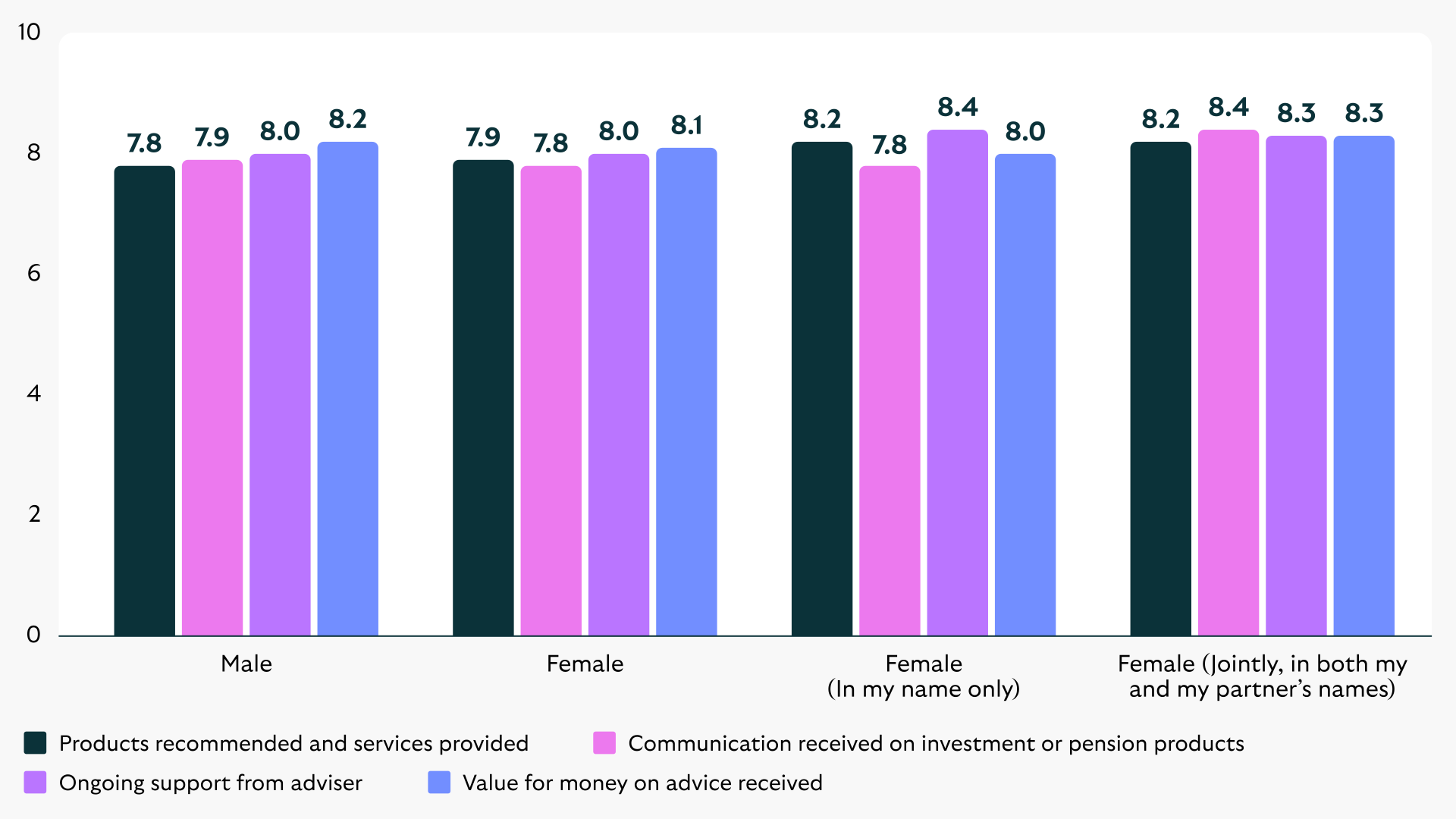
The biggest differences in client experience may not be between men and women, but between different styles of participation and engagement with advice.
The opportunity for your firm
Life events are often the moments when clients deepen or reconsider the advice relationship. Female advisers tell us more than a quarter (27%) of clients in a couple will leave the firm within a year of a significant life event; for male advisers, the figure is 13%.
And nearly a third (31%) of consumers in our survey – people with at least £150,000 of investable assets – have used an adviser in the past but discontinued the relationship.
Handled well, a life event is a moment to deliver meaningful value when clients need it most. Clients who leave feeling reassured, known and capable are more likely to stay, act on recommendations and recommend their adviser.
What you can do, tips from other advice firms
- Checking in quarterly: “sometimes they don’t realise they need to tell you what’s changed.”
- Framing advice around life, not financial products and building playbooks for transitions beyond retirement.
- Explaining concepts in plain language, encouraging questions and checking understanding without testing clients.
- Involving secondary partners and beneficiaries early.
- Measuring client confidence, not just satisfaction.


