


Understanding gold and its role in portfolios


Geopolitical tensions, and concerns about fiscal policy and central banks, have driven the gold price to where it is today.
Gold prices reached an all-time high of $5,400 per troy ounce (toz) at the end of January, before falling back roughly 10% in two days. With the gold price elevated, we assess the main price drivers, the prospects from here, and the role that gold can play in a portfolio.
Understanding the gold price rally
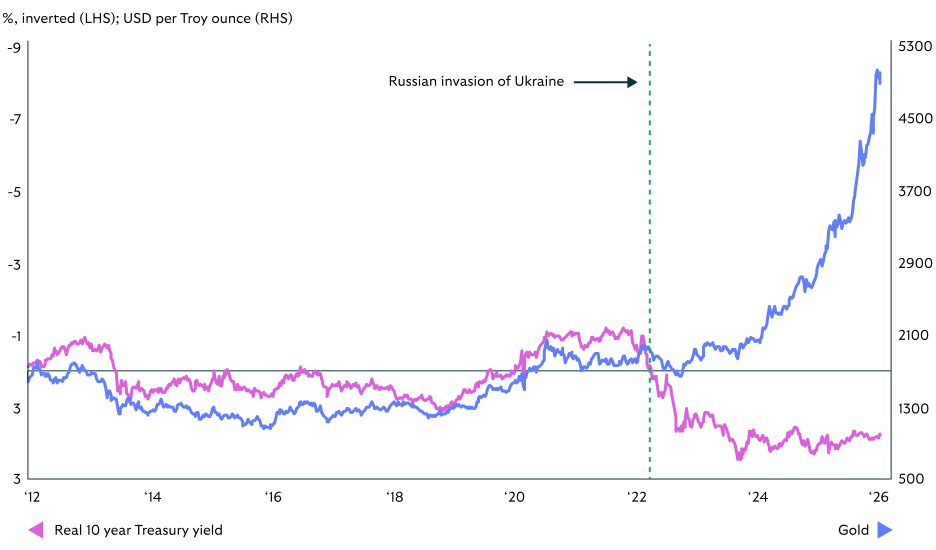
After a decade-long stagnation, the price of gold rose 14% in 2023, 27% in 2024 and 65% in 2025. The price of the yellow metal is now up more than 170% since the start of the Russia-Ukraine war in February 2022.
What is perhaps peculiar about this rise is that it coincided with a period of rising, and then stable real rates. Historically, gold prices have tended to rise when real rates are falling, such as in the period between 2002 and 2012, when aggressive cuts in US interest rates following the tech bubble and then again during the global financial crisis drove a secular bull market in gold prices.
The inverse relationship between gold prices and interest rates is intuitive. Gold does not pay interest or dividends, as financial assets do. Therefore, the opportunity cost of holding gold increases when real rates rise. In addition, rising real rates tend to signal that central banks are focused on controlling inflation, reducing demand for assets that can act as a hedge against inflation, such as gold.
Exhibit 1: Real US 10-year Treasury yield vs. gold
Source: LSEG Datastream, J.P. Morgan Asset Management. Real yield is the US 10-year Treasury inflation-protected security yield. Past performance is not a reliable indicator of current and future results. Data as of 17 February 2026.
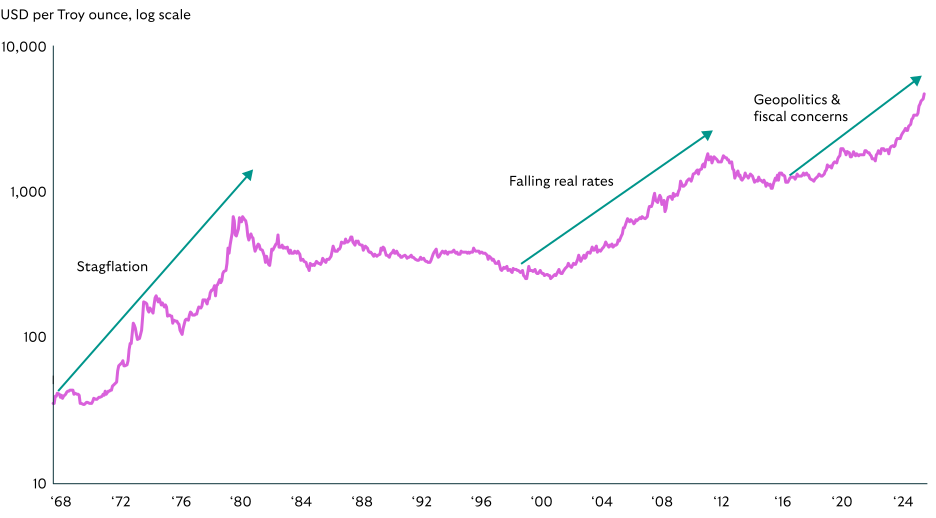
Historically, the breakdown in the relationship between gold and real interest rates has signalled a global economic regime shift. Over time, the gold price has seen long periods of little or no return, punctuated by large increases. The current bull market has coincided with a shift in the economic regime to one that is focused on geopolitics and fiscal concerns.
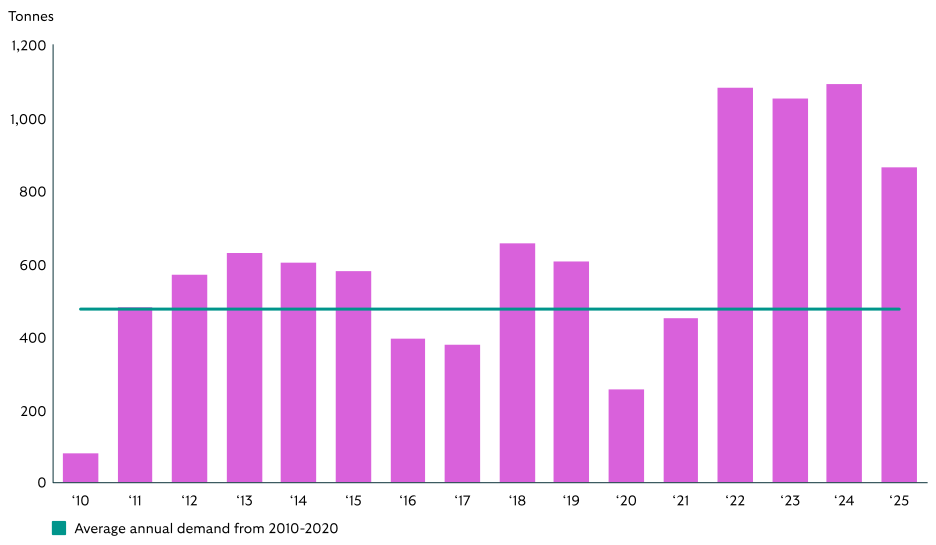
Demand for gold has averaged over 1,000 tonnes per year in the last three years, which is nearly three times the average over the preceding decade.
Exhibit 2: Gold Price
Source: CE, LSEG Datastream, J.P. Morgan Asset Management. Past performance is not a reliable indicator of current and future results. Data as of 17 February 2026.
Geopolitical tensions and changes in reserve holdings
This regime shift has, in our view, led to two interesting developments when it comes to gold. The first is the change that we’ve seen in the behaviour of the world’s central banks and reserve managers. It is no coincidence that the breakdown of the relationship between gold prices and real rates coincided with Russia’s invasion of Ukraine and the subsequent sanctions that were imposed on Russian dollar assets. Gold is perceived to be a neutral asset that is not subject to freezes or blockades, as is the case with currency reserves.
The second development has been the surge we’ve seen in official gold buying. Demand for gold has averaged over 1,000 tonnes per year in the last three years, which is nearly three times the average over the preceding decade. Global central bank gold holdings have reached 36,000 tonnes, surpassing the previous peak from the 1979 oil crisis and nearing the all-time high last seen during the Bretton Woods era of fixed exchange rates. Countries that are distant from the west in geopolitical terms have been particularly active in diversifying into gold.
With gold prices at record highs, gold’s share of global foreign reserves held by central banks has risen from 17% at the end of 2024 (based on World Bank data) to 27% at the end of 2025 (according to the latest estimate from the World Gold Council). This rise means that gold has comfortably surpassed the euro’s share, which was 16% at the end of December 2024 based on data from the International Monetary Fund (IMF) Currency Composition of Official Foreign Exchange Reserves (COFER), and is now the second largest reserve asset. The US dollar’s share remains the highest but has fallen from just under 60% a decade ago to 48% at the end of December 2024 (IMF COFER)1. The current central bank gold buying cycle, and the trend towards foreign reserve diversification, is expected to continue.
Exhibit 3: Annual demand for gold from central banks and other financial institutions
Source: World Gold Council, J.P. Morgan Asset Management. Past performance is not a reliable indicator of current and future results. Data as of 17 February 2026.
According to a World Gold Council survey of 60 central banks in early 2024, around 29% planned to increase their gold reserves in the next year. The survey identified three main reasons for holding gold that remain in place: (1) its use as a long-term store of value and as an inflation hedge; (2) its strong historical performance during crises; and (3) its ability to boost portfolio diversification.
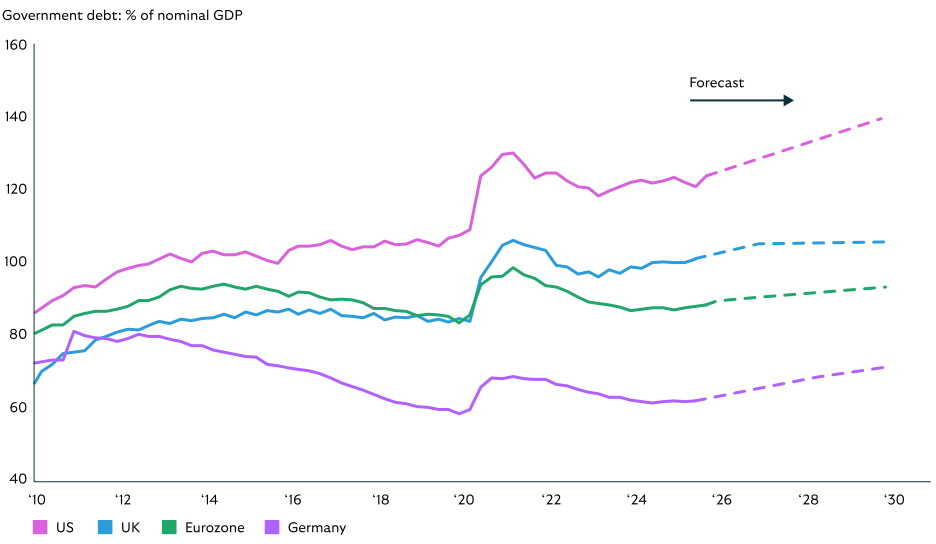
Exhibit 4: Spiralling government debt and inflation concerns
Source: Bank for International Settlements, BEA, Eurostat, IMF, LSEG Datastream, J.P. Morgan Asset Management. Debt refers to gross debt at face value. Dotted lines represent IMF forecasts. Data as of 17 February 2026.
Expansionary fiscal plans, and the trajectory for government debt, have likely also contributed to growing demand for gold from both the public as well as the private sector. The outlook for easier fiscal policy, particularly when paired with the prospect that western central banks could be coerced into lowering rates to support governments, has raised questions about the commitment to price stability and the value of currencies in certain regions. Some of the biggest daily moves in the dollar over recent weeks coincided with news items surrounding an erosion of the Federal Reserve’s (the Fed’s) independence.
The recent fall in gold prices occurred after the nomination of Kevin Warsh as the next Fed chair by President Trump. Clearly the market viewed Warsh as a strong and credible candidate for the role, and one that will preserve price stability and, in turn, maintain the value of the dollar.
Policymakers’ credentials have historically played a significant role in gold price moves. The arrival of Paul Volcker at the Fed in the 1980s with a clear commitment to hike rates to tackle inflation coincided with a long period of gold price weakness.
The role of gold in a portfolio
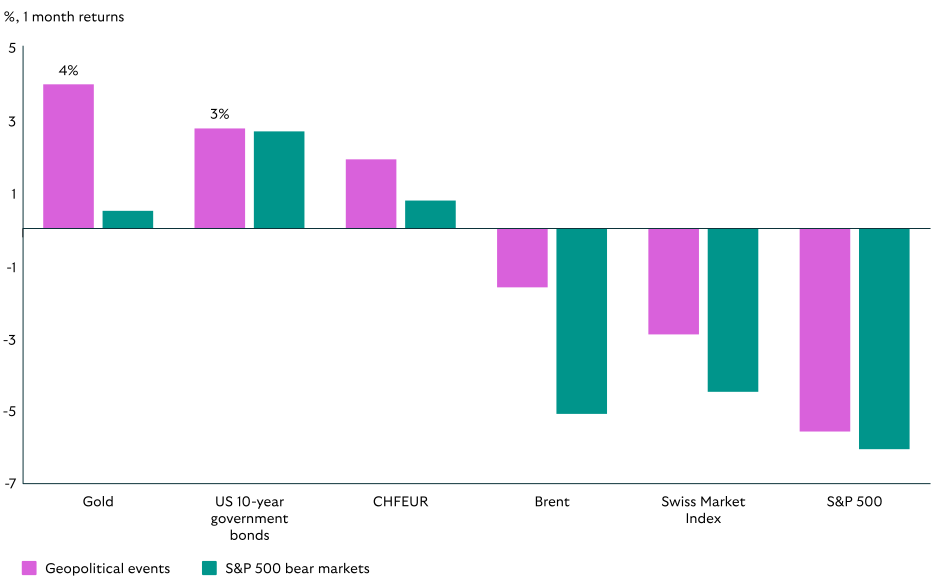
Geopolitical tensions, and concerns about fiscal policy and central banks, have driven the gold price to where it is today. If these concerns flare up again, gold will provide useful insurance for portfolios at a time when both stocks and bonds may be challenged. Looking at the 12 geopolitical risk events that have occurred since the Kuwait invasion and the first Gulf war in 1990, gold is the most resilient safe haven, up 4% in the month following the event. US 10-year bonds tend to perform better than gold during equity bear markets, rather than around geopolitical events.
Exhibit 5: Performance of different asset classes after major global geopolitical risk events and S&P 500 bear markets since 1990
Source: ICE, LSEG Datastream, S&P Global, SWX Swiss Exchange, J.P. Morgan Asset Management. Equity returns are price returns. Past performance is not a reliable indicator of current and future results. Data as of 17 February 2026.
However, despite this historical performance, investors should be mindful of three factors when thinking about the size of any gold allocation in their portfolios.
First, if geopolitical tensions ease and central banks reassert their commitment to price stability, gold could be in for a lengthy period of underperformance, as we have seen historically.
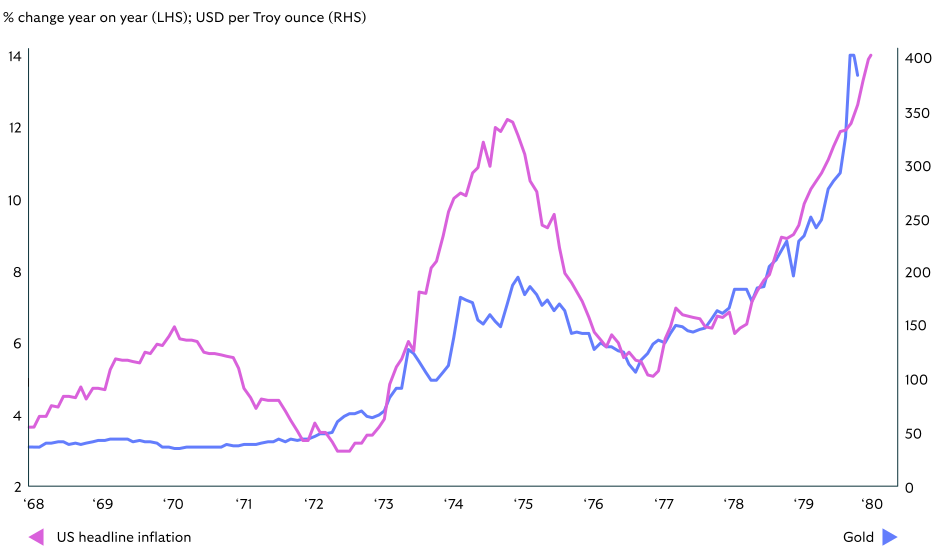
Second, if inflation does soar, gold might not be the best inflation hedging asset. There has been only one period when gold properly acted as an inflation hedge: during the stagflation decade of the 1970s. Following the 1973 oil crisis, Brent oil prices surged 240% in January 1974, triggering an inflation shock, a bear market and a recession. Between 1974 and 1982, US inflation averaged 8% year on year, and the US economy was in contraction 40% of the time (an ISM reading below 50). Gold was by far the best asset to own and returned an annualised real return of 13% (23% nominal). Meanwhile, US equities went nowhere, averaging an annualised real return of 0%, and government bonds offered a negative real total return of 2% annualised.
Geopolitical tensions, and concerns about fiscal policy and central banks, have driven the gold price to where it is today.
Exhibit 6: US inflation and gold prices during the 1970s
Source: BLS, ICE, LSEG Datastream, J.P. Morgan Asset Management. Past performance is not a reliable indicator of current and future results. Data as of 17 February 2026.
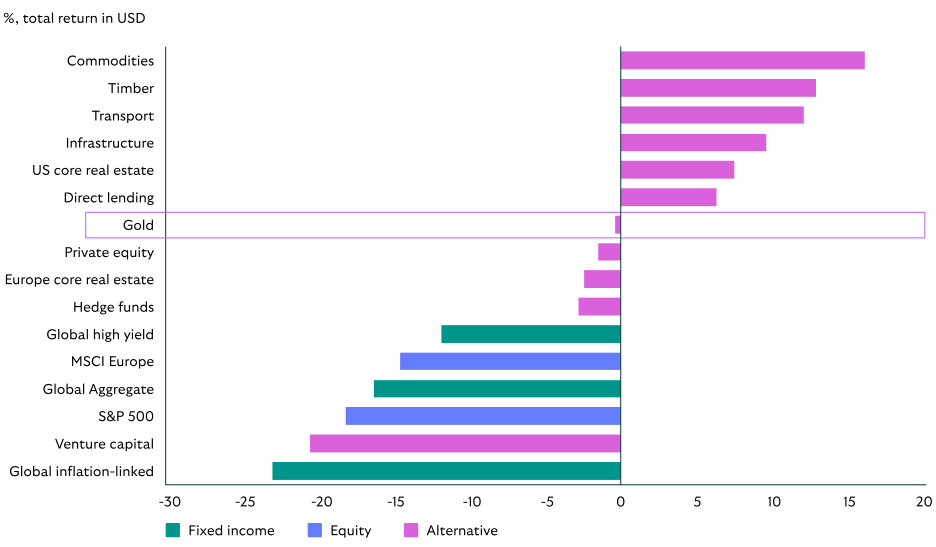
But in other periods, the relationship between inflation and gold has been erratic. For example, gold’s performance in 2022, when it returned 0%, shows that it does not always protect investors when inflation spikes. One could argue that this performance was better than equities and bonds, which offered a negative return of 18% and 20%, respectively. But there are other instruments available to investors today that in our view not only offer more reliable inflation protection but also a sizeable annual yield, such as transportation assets and core infrastructure.
Exhibit 7: US Selected public and private market returns in 2022
Source: Bloomberg, Burgiss, Cliffwater, FactSet, HFRI, ICE BofA, LSEG Datastream, MSCI, NCREIF, S&P Global, J.P. Morgan Asset Management. Global Aggregate: Bloomberg Global Aggregate; Global inflation-linked: Bloomberg Global Inflation-Linked; Global HY: ICE BofA Global High Yield; Hedge funds: HFRI Fund Weighted Composite; US core real estate: NCREIF Property Index – Open End Diversified Core Equity; Europe core real estate: MSCI Global Property Fund Index – Continental Europe; Direct lending: Cliffwater Direct Lending Index; Infrastructure: MSCI Global Quarterly Infrastructure Asset Index (equal-weighted blend); Timber: NCREIF Timberland Total Return Index. Private equity and venture capital are time-weighted returns from Burgiss. Transport returns are derived from a J.P. Morgan Asset Management index. Past performance is not a reliable indicator of current and future results. Data as of 17 February 2026.
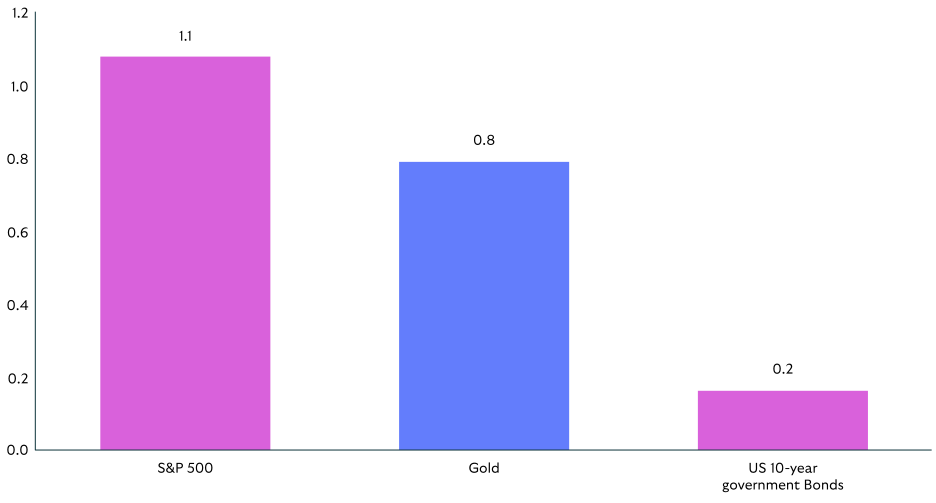
The third reason to think carefully about gold allocations is volatility. Over the last 10 years, the realised volatility of gold has been twice as high as US government bonds, and even higher than US equities. Gold should not, therefore, be thought of as an outright replacement for bonds in a portfolio. And if it is a demand-driven recession that the market fears, core bonds are likely to far outperform gold.
Exhibit 8: Sharpe ratio for different asset classes over the past 10 years
Source: ICE, LSEG Datastream, S&P Global, J.P. Morgan Asset Management. Past performance is not a reliable indicator of current and future results. Data as of 17 February 2026.
Conclusion
As we’ve seen, gold may not provide a reliable substitute for core bonds, and its track record in periods of high inflation has been patchy. Nevertheless, it does still offer useful diversification benefits at a time of elevated geopolitical and inflation risks, which have the potential to challenge both stock and bond prices. Alongside other inflation-hedging assets, such as core infrastructure and transportation, gold therefore deserves its position in portfolios because of the insurance it beings against these modern-day tail risks.
1 According to IMF data, recent buyers include many emerging markets, such as Poland and Hungary, while a wide range of countries have significantly increased their gold holdings since 2019, with notable increases from the Czech Republic (+418%), the United Arab Emirates (+240%), Egypt (+59%), Turkey (+54%), and Thailand and Iraq (+52% each).
The Market Insights programme provides comprehensive data and commentary on global markets without reference to products. Designed as a tool to help clients understand the markets and support investment decision-making, the programme explores the implications of current economic data and changing market conditions. For the purposes of MiFID II, the JPM Market Insights and Portfolio Insights programmes are marketing communications and are not in scope for any MiFID II / MiFIR requirements specifically related to investment research. Furthermore, the J.P. Morgan Asset Management Market Insights and Portfolio Insights programmes, as non-independent research, have not been prepared in accordance with legal requirements designed to promote the independence of investment research, nor are they subject to any prohibition on dealing ahead of the dissemination of investment research.
This document is a general communication being provided for informational purposes only. It is educational in nature and not designed to be taken as advice or a recommendation for any specific investment product, strategy, plan feature or other purpose in any jurisdiction, nor is it a commitment from J.P. Morgan Asset Management or any of its subsidiaries to participate in any of the transactions mentioned herein. Any examples used are generic, hypothetical and for illustration purposes only. This material does not contain sufficient information to support an investment decision and it should not be relied upon by you in evaluating the merits of investing in any securities or products. In addition, users should make an independent assessment of the legal, regulatory, tax, credit, and accounting implications and determine, together with their own financial professional, if any investment mentioned herein is believed to be appropriate to their personal goals. Investors should ensure that they obtain all available relevant information before making any investment. Any forecasts, figures, opinions or investment techniques and strategies set out are for information purposes only, based on certain assumptions and current market conditions and are subject to change without prior notice. It should be noted that investment involves risks, the value of investments and the income from them may fluctuate in accordance with market conditions and taxation agreements and investors may not get back the full amount invested. Both past performance and yields are not a reliable indicator of current and future results. J.P. Morgan Asset Management is the brand for the asset management business of JPMorgan Chase & Co. and its affiliates worldwide. To the extent permitted by applicable law, we may record telephone calls and monitor electronic communications to comply with our legal and regulatory obligations and internal policies. Personal data will be collected, stored and processed by J.P. Morgan Asset Management in accordance with our privacy policies at https://am.jpmorgan.com/global/privacy. This communication is issued by the following entities: In the United States, by J.P. Morgan Investment Management Inc. or J.P. Morgan Alternative Asset Management, Inc., both regulated by the Securities and Exchange Commission; in Latin America, for intended recipients’ use only, by local J.P. Morgan entities, as the case may be.; in Canada, for institutional clients’ use only, by JPMorgan Asset Management (Canada) Inc., which is a registered Portfolio Manager and Exempt Market Dealer in all Canadian provinces and territories except the Yukon, an Investment Fund Manager in British Columbia, Ontario, Quebec, and Newfoundland and Labrador, and a derivatives adviser in Ontario and Quebec. In the United Kingdom, by JPMorgan Asset Management (UK) Limited, which is authorized and regulated by the Financial Conduct Authority; in other European jurisdictions, by JPMorgan Asset Management (Europe) S.à r.l. In Asia Pacific (“APAC”), by the following issuing entities and in the respective jurisdictions in which they are primarily regulated: JPMorgan Asset Management (Asia Pacific) Limited, or JPMorgan Funds (Asia) Limited, or JPMorgan Asset Management Real Assets (Asia) Limited, each of which is regulated by the Securities and Futures Commission of Hong Kong; JPMorgan Asset Management (Singapore) Limited (Co. Reg. No. 197601586K), this advertisement or publication has not been reviewed by the Monetary Authority of Singapore; JPMorgan Asset Management (Taiwan) Limited; JPMorgan Asset Management (Japan) Limited, which is a member of the Investment Trusts Association, Japan, the Japan Investment Advisers Association, Type II Financial Instruments Firms Association and the Japan Securities Dealers Association and is regulated by the Financial Services Agency (registration number “Kanto Local Finance Bureau (Financial Instruments Firm) No. 330”); in Australia, to wholesale clients only as defined in section 761A and 761G of the Corporations Act 2001 (Commonwealth), by JPMorgan Asset Management (Australia) Limited (ABN 55143832080) (AFSL 376919). For all other markets in APAC, to intended recipients only. For US only: If you are a person with a disability and need additional support in viewing the material, please call us at 1-800-343-1113 for assistance.
Copyright @2026 JPMorgan Chase & Co. All rights reserved


