


National Retirement Forecast

The National Retirement Forecast (NRF), first run in our 2023 Retirement Report with Frontier Economics, projects retirement outcomes for those aged 22 to 65 based on savings, behaviours and income sources, comparing expected income to potential living and housing costs in retirement. The NRF is based on data from approximately 6,000 people.
We benchmark our retirement forecast to Pensions UK’s Retirement Living Standards (RLS). These standards outline the income thresholds for different retirement lifestyles (“minimum”, “moderate” and “comfortable”) showing how much can be afforded in retirement across different categories of spending such as clothing, transportation, holidays, and home maintenance.
The NRF shows an improved picture in 2026 but 12.2m still face pension poverty
According to our 2026 forecast, 31% of UK adults risk not being able to cover basic needs in retirement, an estimated 12.2m people. This is an improvement from last year where we saw 39% (15.3m) of people at risk of falling short.
Overall, 8% of people have moved from a projected “less than minimum” retirement lifestyle to a “minimum” retirement lifestyle.
The number of people facing a ‘less than minimum’ retirement decreased 20% this year
Due to rounding, totals may not always equal 100.
Source: Frontier Economics modelling based on Scottish Widows’ annual Retirement Report survey, and using Pension UK’s Retirement Living Standards.
However, this is a mixed picture. While projected outcomes have improved on last year, much of that improvement appears to reflect changes in the expected costs for a minimum retirement lifestyle (partially due to a decrease in energy costs), rather than a marked strengthening in people’s underlying savings position.
- Cost of “minimum” lifestyle decreased: Around half of this improvement is explained by changes in the Retirement Living Standards, which found that the cost of a “minimum” lifestyle decreased. While a positive sign, this fall was partially based on decreasing energy costs, which have recently started rising once again and may impact projections next year. This shows the large impact that energy costs have on retirement prospects, and the need to deliver lower and more predictable energy costs to provide confidence in how much people need to save.
- Improvement in the position of those with no pension arrangements: The other half of the increase is explained by a slight improvement in the position of those with no pension arrangements, who make up most of those expecting a ‘less than minimum’ retirement. In the 2026 survey, this sub-group has slightly higher pay, slightly higher non-pension savings and more of them are projected to own their home in retirement – therefore saving on housing costs. This has contributed to the modest (£200) increase in median projected household retirement incomes from £25.7k/year in 2025 to £25.9k/year in 2026.
There are substantial differences in retirement prospects across ethnicities
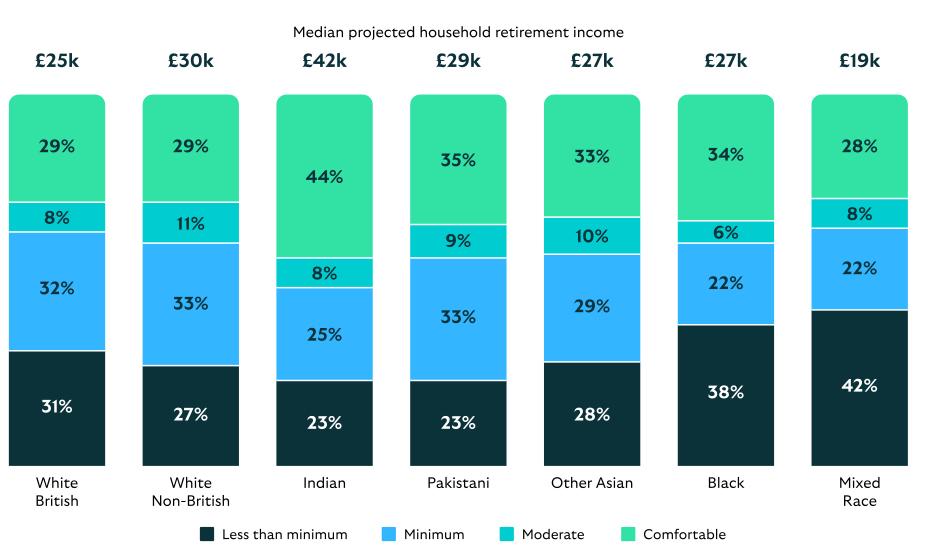
A comparison of retirement outcomes between White British individuals and people from ethnic minority backgrounds shows broadly similar results but this hides important variation in retirement prospects within different ethnic groups. Those who are Indian or Pakistani are most likely to be on track for above minimum retirement outcomes. While those who are Black or are Mixed race are more likely to fall below minimum retirement outcomes.
Two key factors that help explain the differences between ethnicities are having a pension arrangement in place and expected home ownership in retirement. For example, those who are Indian are more likely to have some form of pension arrangements (66% vs 57% for overall) and a lower proportion expect to rent in retirement (18% vs 23% overall).
Projected retirement outcomes vary across ethnicities
Due to rounding, totals may not always equal 100.
Source: Frontier Economics modelling based on Scottish Widows’ annual Retirement Report survey, and using Pension UK’s Retirement Living Standards.
There are differences in retirement prospects across the UK
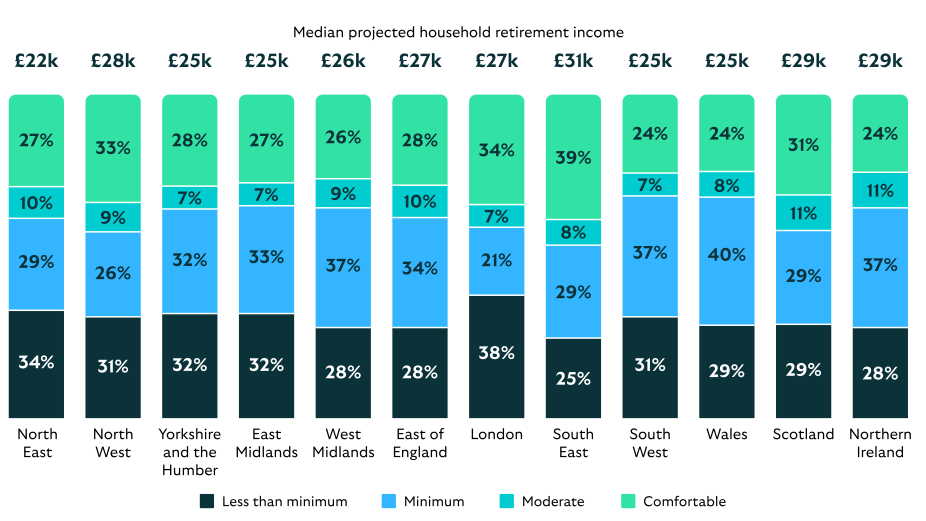
Pension poverty generally sits between 28% and 34% across the nations and regions of the UK. The exceptions are the South East, with a lower pension poverty rate of 25%, and London, with a higher rate of 38%. The South East is where people are most likely to have a comfortable retirement, with about four in ten projected to do so. London also ranks relatively highly on this measure, with 34% forecast to have a comfortable retirement, suggesting a more polarised picture than in other regions.
Projected retirement outcomes vary across regions
Due to rounding, totals may not always equal 100.
Source: Frontier Economics modelling based on Scottish Widows’ annual Retirement Report survey, and using Pension UK’s Retirement Living Standards.
31% of UK adults are currently at risk of failing to cover their basic needs in retirement – that’s equivalent to a worrying 12.2 million people.”
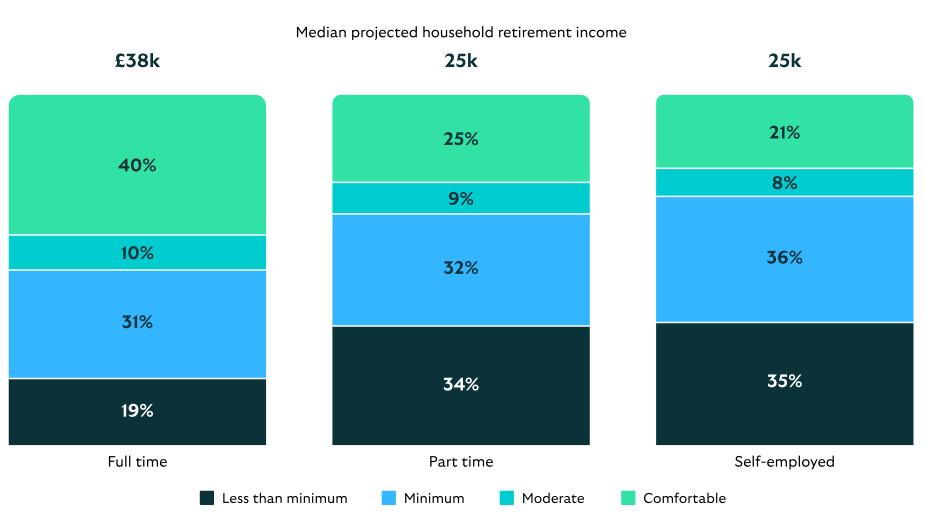
The self-employed and part-time employed are more likely to face pension poverty
Fewer than one in five full-time employees face pension poverty, whereas more than a third of those who are in part-time employment or are self employed face a less than minimum retirement lifestyle. While increases to contribution levels under automatic enrolment can reduce pension poverty, it’s important to remember that those self-employed and those that work part-time jobs below the earnings threshold are not currently automatically enrolled.
Due to rounding, totals may not always equal 100.
Source: Frontier Economics modelling based on Scottish Widows’ annual Retirement Report survey, and using Pension UK’s Retirement Living Standards.
Those who are vulnerable, especially those in poor health, are more likely to face pension poverty
Those with a vulnerability are more likely to face pension poverty, with 44% on track for a less than minimum lifestyle. We define vulnerability in line with the FCA to include those people who life events, health, resilience or capability make particularly susceptible to harm. The FCA finds that 26.4 million UK adults had characteristics of vulnerability, that is around half the population. This is in part driven by lower rates of full-time employment amongst those who are vulnerable; of those who are employed fewer than two-thirds of vulnerable people are employed full-time compared to more than three-quarters of the overall population.
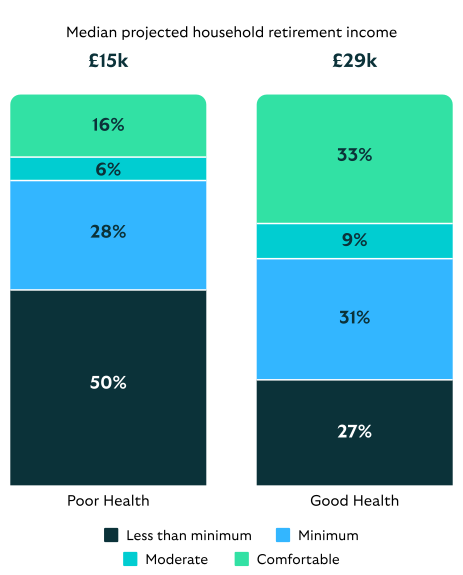
Focussing specifically on those with physical or mental health conditions that impact their day-to-day lives, we see that fully half (50%) face pension poverty, which is double the rate of the rest of the population (27%). Despite an increase in overall life expectancy in the UK from 2019 to 2024, healthy life expectancy in the UK has decreased to the lowest levels recorded (see ONS report). This trend is set to increase, and this suggests higher living costs and possibly care costs which calls for higher pension savings. We explore both vulnerability and health further in this report.
Many of those with vulnerability face a “less than minimum” retirement lifestyle
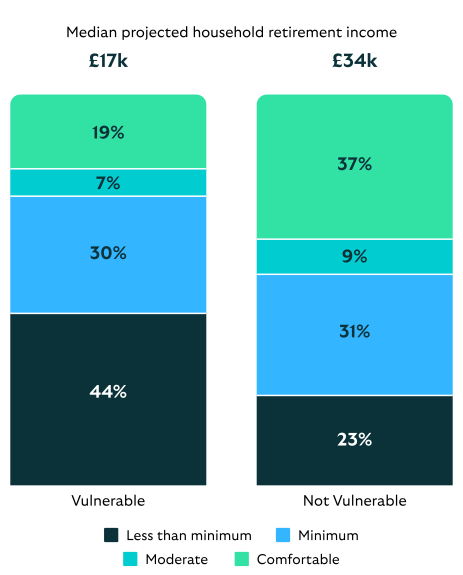
Half of those in poor health face pension poverty
Due to rounding, totals may not always equal 100.
Source: Frontier Economics modelling based on Scottish Widows’ annual Retirement Report survey, and using Pension UK’s Retirement Living Standards.
Next – in our scenario modelling we look at the consequences of increasing default contribution rates.


