


Health, saving & retirement

Health challenges have prevented many from working and saving
We know health is important. The Pension Commission has recognised that increasing levels of poor health and disability are forcing many people out of the workforce before reaching State Pension age, leaving them with inadequate incomes. Despite an increase in overall life expectancy in the UK, healthy life expectancy in the UK has been decreasing and this trend is set to continue (as explored in our groundbreaking initiative with Macmillan Cancer Support). This will lead to higher living costs and possibly care costs which call for higher pension savings.
It is troubling therefore that a third (34%) of the working age population (22-64) have had their work or earnings affected by health issues in the last 5 years. Perhaps unsurprisingly, this is higher amongst those in the working age population that are older (ages 50 to 64). When health disrupts earnings, people are more likely to shift from long-term planning to coping in the short-term, by reducing pension contributions or using savings earlier than planned.
Health issues have affected the ability of many people to work in the last 5 years, particularly those between 50 and 64
It is troubling therefore that a third (34%) of the working age population (22-64) have had their work or earnings affected by health issues in the last 5 years.”
Health challenges contribute to low and unpredictable incomes
Poor health can affect retirement saving not only through its impact on people’s ability to work, but also through the lower and less predictable incomes that often follow.
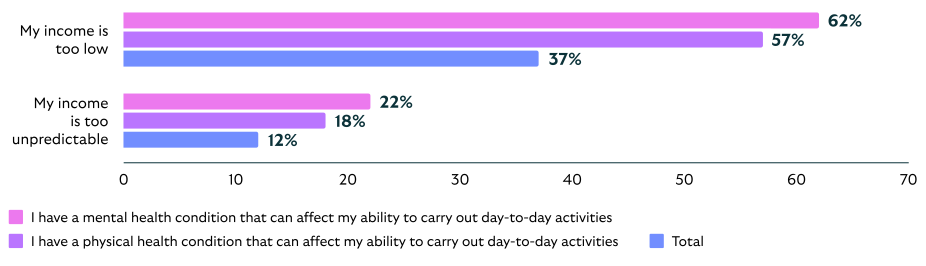
More than a third (37%) of working age adults say low incomes make it hard for them to save for retirement. However, this is a significantly bigger issue for those with health conditions. More than half (57%) of those with a physical health condition and 6 in 10 (62%) of those with a mental health condition say that low incomes prevent them from saving for retirement.
Unpredictable incomes create an additional barrier because they make it harder to plan, budget and sustain regular saving over time. Where income is uncertain, people may be more likely to reduce, pause or stop pension contributions altogether as short-term financial demands take priority. Around 1 in 5 of those with health conditions say unpredictable income is a barrier to saving for retirement, around double the rate in the wider population.
Low and unpredictable incomes make it harder for those with health conditions to save for retirement
Poor health can disrupt money management
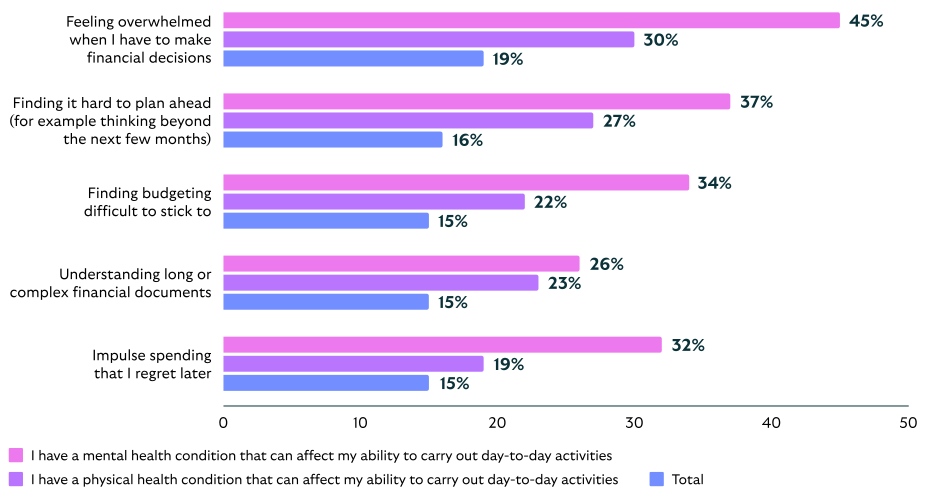
On top of work disruption and low and variable incomes, there are many money management challenges that can make staying on top of finances difficult. Together, these challenges – such as struggling to understand long and complex financial documents and impulse spending – are experienced by around half (51%) of UK adults, with the most common challenge, feeling overwhelmed when having to make financial decisions, experienced by around one in five (19%).
For those with health conditions, both physical and mental, the challenge is more pronounced. Around two thirds (64%) of those with a physical health conditions and 4 in 5 (78%) of those with a mental health condition report money management challenges. Budgeting and planning are two crucial skills in managing money today and preparing for retirement later; those with a physical or mental health condition struggle with these at a higher rate than the general population, at 25% and 33% respectively.
Money management challenges are more common amongst those with health conditions
Turning the tide on pensions outcomes for those in poor health
These findings show that poor health can weaken retirement prospects well before people leave the labour market, by affecting not just earnings but also the ability to manage money and sustain long-term saving.
The scale of the challenge is clear: almost a quarter (24%) of working age adults think they will not be able to afford to retire because poor health will affect their ability to work. The risk, therefore, is not only that people save less in the short term, but that repeated disruption to work and income leaves them with too little opportunity to recover before retirement.
There are no easy answers to these challenges, but several strands are important:
- State support. There is clearly a role for the state to support people in working life and retirement who experience health conditions, and a range of existing policies do so (including the State Pension).
- Earlier and greater pension savings. Relatively low savings and current automatic enrolment defaults mean many are or will be dependent on continuing to work to avoid pension poverty, which is jeopardised if they become ill. Earlier and greater savings can therefore provide a stronger financial cushion for retirement and reduce the impact of later ill health.
- Reducing the protection gap. The FCA has recently called out the significant ‘protection gap’ including low uptake of insurance products, like critical illness cover and income protection, which can provide a financial lifeline when earnings are interrupted. Closing that gap could reduce the financial impact for many who experience poor health.
- Tailored guidance and support. Some of the challenges associated with poor health stem not just from unstable jobs and incomes for some, but from difficulties with planning, budgeting or financial decision-making for others. Further focus from industry and government is required to understand how best to guide and support those with poor health.
Next – Scottish Widows’ Head of Policy Pete Glancy outlines the key next steps.


