


Living for today versus saving for tomorrow

The cost of essentials matters both when preparing for retirement and when living in retirement. Lower costs in later life reduce the level of income people need to achieve a given living standard, while lower costs during working life can make it easier to maintain retirement saving.
Energy costs provide a clear example of this. The Retirement Living Standards show that energy costs in retirement fell by around 25% to 30% between 2023 and 2024. For a single retiree on a minimum retirement lifestyle, weekly energy costs fell from around £33 in 2023 to around £24 in 2024. That is equivalent to an annual saving of roughly £500, which helps to explain around half of the projected fall in pension poverty in this year’s National Retirement Forecast.
Consumers with a vulnerability are only half as likely to get back to saving the same amount once they reduced retirement saving.”
The significance of this change is clear from the savings required to offset it in retirement. If the recent fall in energy costs were fully reversed, so that expected retirement energy costs were again around £500 a year higher in today’s terms, the average under-30 DC saver currently contributing less than 12% of salary would need statutory contribution rates to rise by around 0.4 percentage points, from 8% to 8.4%, on earnings up to £50k to offset the difference. For DC savers overall, the increase required would be larger, reflecting the shorter period over which they have to save, amounting to around 1 percentage points, from 8% to 9%.
While rising costs, including on energy, can make retirement more expensive they can also make it harder for people to maintain retirement saving and this is what we turn to next.
Financial pressures have led some to reduce retirement saving
A significant proportion of the UK adult population (54%) say saving for retirement gives them peace of mind for the future, but conversely nearly half of UK adults (45%) say saving for retirement makes them feel more stressed about money today, and over half (52%) say thinking about retirement savings makes them feel overwhelmed.
For many, saving for tomorrow is also at odds with the financial pressures of today. Among those saving for retirement, 41% say it puts some strain on their day-to-day finances, including 11% that say it puts a big strain.

When under financial pressure, retirement saving is something people cut back on. Around a quarter (23%) of people have said that they stopped saving or reduced what they are saving for retirement because of short-term financial pressures. For those who have stopped or reduced saving, many point to the cost of living (43%), static incomes (31%), or a change in their household job situation (25%).
Reductions may take the form of reduced pension contributions or reductions in other long-term savings. Much of the reduction may be in the form of non-pension savings and evidence supports that conclusion. Scottish Widows data points to only 5% of members reducing contributions in 2025 and the UK Government found that only 0.8% of workplace pension savers made an active decision to stop saving into their pension in 2023.
For many, while they may not have actively reduced their pension contribution, they have kept it at the same level, resulting in the amount they are contributing decreasing in real terms over time.
1 in 10 people have said they reduced what they were saving in the last 12 months due to financial pressures
Once people stop saving for retirement, it is difficult to start again
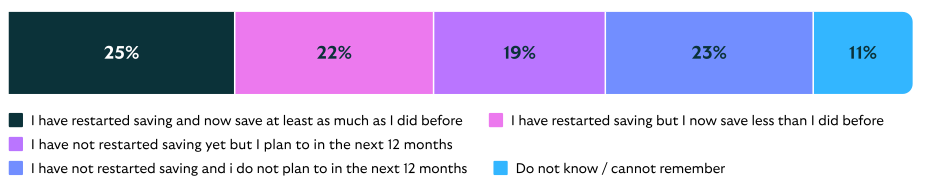
Only 25% of UK adults who reduced or stopped saving due to short-term financial pressures reported now saving at least as much as they did before. More commonly people have said that they either restarted saving but have reduced how much they are saving (22%) or have not returned to saving (42%). Around half of those have not returned to saving say that they do not plan to in the next 12 months. Re-enrolment helps those who have opted out of the workplace pension to be added back in every three years, but there is more need for measures that help savers return to saving during and after periods of financial difficulty.
Retirement saving is often competing with more immediate priorities. Two fifths (40%) of working-age UK adults who said that they have stopped or reduced their saving for retirement because of short-term financial pressure stated saving for retirement isn’t currently a priority.
Only 1 in 4 people who have reduced their retirement savings say they have returned to the same level of saving again
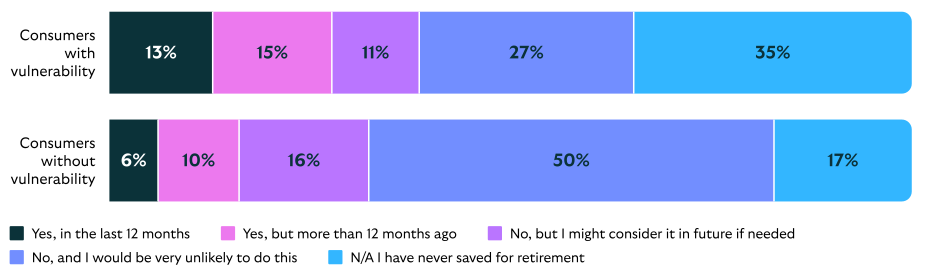
The picture is particularly troubling for those who are vulnerable
More than one in ten (13%) vulnerable individuals said that they have stopped or reduced retirement saving in the last 12 months. That’s on top of more than a third (35%) who said that they have never saved for retirement. This is around double the rates of those without vulnerable characteristics.
Those who are vulnerable are more likely to have stopped or reduced their saving for retirement
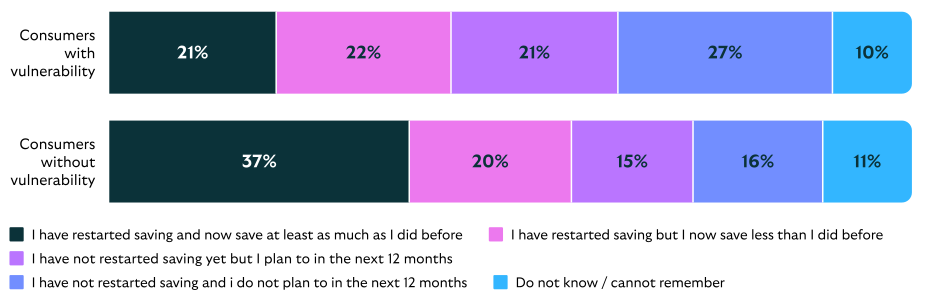
Individuals with a vulnerability are only half as likely to get back to saving the same amount once they reduced retirement saving. Only one in five (21%) vulnerable individuals who said that they have stopped saving have reported returning to saving the same amount. This compares to more than a third of those (37%) without vulnerabilities.
Those who are vulnerable are also less likely to get back to saving again once they’ve stopped

Expert analysis
Robert Cochran
Scottish Widows Pension Expert
There is a tension between paying for today and saving for the future and for every person it is about getting the right balance between these competing financial needs. Millions of people are not saving enough for retirement and don’t have enough savings set aside for a rainy day.
The findings in this section suggest that the key challenge is not simply getting people to start saving for retirement, but helping them to continue saving following strains on their household budgets. Whilst official government figures show the number of people opting out or cutting back on pension contributions remain reassuringly low – it’s interesting how this member research often points to a higher incidence of people opting out or having plans to cutback on pensions, they consider it a strategy for coping. Greater emphasis on measures that help savers remain connected to pension saving during and after periods of financial difficulty are likely required. Encouraging people to start saving early is important, because it normalises pensions saving as part of their overall financial situation and there may be reasons that people cannot save later such as financial pressure or health concerns.
There is also a strong case for focusing additional support on groups at greater risk of falling behind, particularly those in vulnerable circumstances. The results point to a clear disparity in retirement saving behaviour and recovery, suggesting that vulnerability should be treated as a central consideration in the design of policy and interventions, rather than a peripheral issue.
At the same time, vulnerability is not a single or uniform concept. The barriers faced by, for example, those with low financial resilience may differ materially from those experienced by people with physical or mental health conditions. That means the most effective response is unlikely to be a single intervention applied uniformly across all groups. Instead, the evidence points to the need for a more tailored approach, with different forms of support, communication and engagement for different types of vulnerability.
Scottish Widows offers a wealth of digital tools to help people plan their financial future:
- Our ‘Be Money Well’ hub provides access to a wide range of free learning to equip people with financial and digital skills to help them manage their money and plan for their future.
- ‘Invest In You’ is a one-stop shop with a focus on women, but with useful content for anyone who wants to invest in their financial future, with guidance, tools and games which help you learn more about financial planning.
Next – we look at how health challenges can provide additional barriers to saving for retirement.


