


Access to pensions is a matter of choice

Pension freedoms have made choice a central feature of retirement. Customers can take cash, buy a guaranteed income, keep money invested, combine different options over time or delay access. This flexibility is valuable, but it also means people need clearer support to understand the consequences of their choices.
To understand whether people are prepared for retirement income decisions, it is useful to compare what pre-retirees expect to do with the actions those already in retirement have taken. Where expectations and reality differ, this may point to areas where people need clearer information, earlier support or more time to consider their options.
The choices people face at retirement can be complicated
Deciding how to access pension savings can be daunting and the options available not mutually exclusive – some people may choose to combine them over time. For example, some may use drawdown earlier in retirement before buying a guaranteed income later, an approach often described as “flex then fix”. Each option involves trade-offs between tax, flexibility and risk. A separate decision is what to do with tax-free cash. In the UK, people can usually take up to 25% of their pension as a tax-free lump sum, subject to a maximum of £268,275. This can be taken all at once at the start of retirement, in stages over retirement, or not taken at all. Any withdrawals above the tax-free amount are usually taxed as income, so the timing and size of withdrawals can affect the overall tax paid.
Pre-retirees’ plans broadly reflect the choices retirees make in practice
Pre-retirees’ expectations are broadly in line with the choices retirees report making, although some differences stand out. Pre-retirees told us they were more likely to expect to keep their pot invested and take regular withdrawals, than the retirees we surveyed did in practice, who favoured buying a guaranteed income for life – an annuity. Those in retirement were also slightly more likely to have taken their whole pot as cash at or soon after they have retired. More than a third (34%) of pre-retirees have not yet decided what they will do, underlining the importance of timely support before people access their pension.
This gap between expectations and reality matters because retirement income decisions are not made in a vacuum. They are shaped by pot size, health, household finances, tax, confidence, available support and the options people are shown at the point they make the decision.
Retirement expectations and retirement choices are broadly aligned
Graph shows the options that were presented to pre-retirees. Retirees were presented the same options but in the past tense. Results are rebased to exclude ‘don’t know’ answers.
31% of UK adults are currently at risk of failing to cover their basic needs in retirement – that’s equivalent to a worrying 12.2 million people.”
Tax-free lump sums are taken upfront more often than pre-retirees expect
There is a clear gap between expectations and behaviour on the tax-free lump sum. Almost two-thirds (64%) of retirees say they took their tax-free lump sum upfront, compared with less than half (46%) of pre-retirees who expect to do so. Pre-retirees are more likely than retirees to expect to take their tax-free lump sum in stages, or to say they do not expect to take one at all.
This is one of the clearest examples of the difference between pre-retirement expectations and post-retirement reality. It suggests that people may approach retirement expecting to preserve flexibility, but then make more immediate choices once the option to access cash becomes real.
Taking the tax-free lump sum upfront is more common in practice than expected
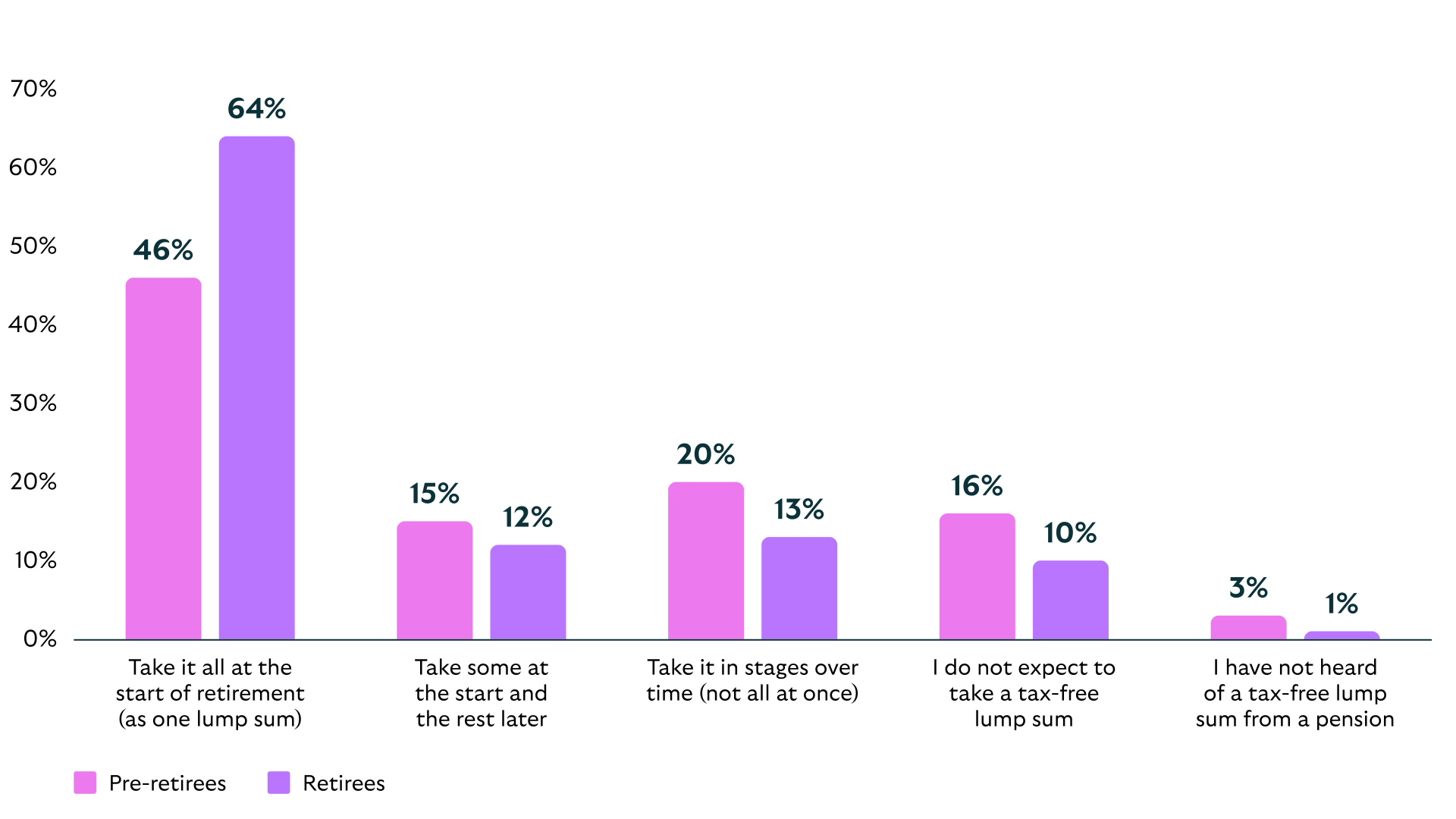
Graph shows the options that were presented to pre-retirees. Retirees were presented the same options but in the past tense. Results are rebased to exclude ‘don’t know’ answers.
Upcoming initiatives to offer more decision-making support will help
We know that the overriding feeling that people face when they retire is fear. Facing into a seismic change in how they live their day to day lives, they also have to deal with some of the biggest and most complex financial decisions they’ll ever have to make.
Retirees often want financial advice but are reluctant to pay for it. Wealthier households tend to have greater access to holistic advice, when lower income retirees could be said to need it just as much, if not more. The government is keen to return pensions to their intended use – generating income in retirement – and changes are afoot to support people in making the right decisions for their pension income. Targeted Support, Guided Retirement, digital advice, workplace support and engagement over the longer term will all start to shape how people receive support both at and on the journey towards retirement.


