


Retirement Report 2026 Part Two: Retirement income decisions and support

Many people understand they have choices at retirement, but far fewer feel confident about what options are best for them. That matters. Decisions about taking money from a pension involve important trade-offs between certainty and flexibility, income today and security tomorrow, personal needs and what people may want to leave behind.
Those choices are the result of pension freedoms, which have given customers more control over how and when they access their pension savings. We support those freedoms because they recognise that everyone’s retirement expectations are different. People may choose to keep on working in some capacity, or they may be caring for others, paying down debt, supporting family or managing changing health needs. The policy challenge is not to narrow choice, but to make choice easier to navigate.
In this second part of our 2026 Retirement Report series, we delve deeper into decumulation – the moment at which people stop saving and start living off their retirement income – and the decision-making support that is needed.
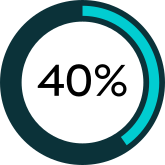
Most pre-retirees say they have some awareness of the choices available when taking money from a defined contribution pension, but detailed knowledge is limited. Around 40% have little or no knowledge of the options available to them at retirement, and only a minority say they are aware of all the main options.

Most pre-retirees say they have some awareness of the choices available when taking money from a defined contribution pension, but detailed knowledge is limited. Around 40% have little or no knowledge of the options available to them at retirement, and only a minority say they are aware of all the main options.
Government and regulators have already begun to respond to this support gap. The new targeted support framework can help providers offer more relevant, timely support to groups of customers with similar needs. The Pension Schemes Act 2026 has also paved the way for Guided Retirement, including pathways that could make it easier for people who are unwilling or unable to make an active choice to access a suitable retirement income route. Proposals to simplify financial advice could add another important layer of help for those who need something more tailored than guidance but do not need, or cannot afford, full holistic advice.
It’s encouraging to see this progress and Scottish Widows is contributing to the development of these reforms, including through work on Guided Retirement and our own plans for new support journeys, including our in-app InvestAI agent. It’s crucial that industry helps people make the right choices for them as individuals and households, with defaults acting as a backstop rather than the main destination.
It’s crucial that industry helps people make the right choices for them as individuals and households, with defaults acting as a backstop rather than the main destination.”
Support needs to come earlier
Most pre-retirees recognise the importance of their retirement income decisions. 81% say they would look for advice or guidance before deciding how to take money from their pension. But people are often leaving it too late: one in five (19%) expect to wait until the year they retire or first access their pension before taking advice. A further quarter (24%) either do not expect to seek advice or guidance, won’t do so until after taking money or do not know when they will seek guidance.
The type of support people expect to use is closely linked to income. More than half (51%) of the highest income households expect to pay for professional advice, compared with less than a quarter (23%) of the lowest income households. Among lower-income households, 28% expect to turn to family and friends. This means that those households most at risk of facing retirement poverty may also be those least likely to seek support.
This disparity matters even more in the context of the Pensions Commission’s interim findings and indeed the first part of our own Retirement Report, which point to a system where many people are not saving enough. If people have smaller pots than they need, decisions about when and how to take money become even more important.
There are encouraging signs. Retirees generally report positive experiences when taking their pension income and many feel confident that they made the right decision for their circumstances.

One of the biggest concerns is not that people are making bad decisions about their retirement – it’s that they’re not making decisions at all. This creeping financial inertia is toxic – but it needn’t be like this. Technology – and increasingly AI – has an important role to play here and one that we will explore in depth in Part Three of our report, but it is not the whole story.
Pension tracing tools, open finance and targeted support have the potential to connect people more closely with their pensions, seek guidance and help them see their pensions in one place, making retirement decisions feel more intuitive. Such steps should place pensions alongside wider household finances, help to reduce the cost of support and give people confidence that their data, money and decisions are protected.
Guided Retirement could be an important part of this landscape, particularly for people who reach retirement without a clear plan. But default pathways should not become a substitute for engagement. The best outcome is a system where people are supported to understand the choices created by pension freedoms and can make decisions that reflect their own needs, with carefully designed defaults available for those who need them.
A comfortable retirement should not depend on whether someone can afford advice or already knows the right questions to ask. As an industry, we need to help people engage earlier, understand their choices more clearly and feel confident that support is available when they need it.
Retirement should be seen less as the end of someone’s working life and more as the beginning of a new chapter, where they get to choose the type of lifestyle they want. Achieving that requires careful planning, and that needs to start many years in advance.
Help is at hand to make those decisions, and this report examines the options in more depth.


