


Energy and inflation

In this article, Matt Brennan, Head of Asset Allocation, considers the different types of inflation and the influence of energy costs on overall price increases.
Key points
- Inflation has started rising once more.
- Driven by a squeeze on supply of oil.
- Energy is important factor in business costs, and has a big influence on inflation overall.
The recent supply shock to energy markets has led to prices surging amid the prolonged closure of the Straits of Hormuz and war-inflicted damage to oil and gas infrastructure. Inevitably, this has led to worries about the likely impact on global inflation and the potential impact on consumers, businesses and even governments. Indeed, we have already seen a step up in inflation in some major economies.
Inflating
When there’s an imbalance of supply and demand, like the world energy markets are currently experiencing, inflation can result. This type of inflation is called supply-push, the other main type of inflation is demand-pull.
Demand-pull inflation
This occurs when demand outstrips supply. inflation is led by increasing costs of production, which then get passed on to other businesses and ultimately consumers. It tends to be seen when economic growth is high, and consumers are willing to spend. As such, prices moving higher because more money is chasing static levels of supply. Other causes include growth in demand for exports or an upwards shift in government spending, in anticipation of prices rising or because the economic system has seen a rise in supply of money.
Supply-push (or cost-push inflation)
In contrast, type of inflation, production costs step higher and businesses have to raise their prices to cover theses costs and maintain profitability. The increase in production costs is due to rising raw material prices, energy costs, or rising wages, such as a rise in the minimum wage. This can often happen due to unexpected events which disrupt the supply chain. For example, natural disaster damaging factories or other production facilities.
At the moment, buyers have been chasing oil and gas amid limitations in supply because of the bottleneck in the Persian Gulf. And we have seen small steps higher in inflation as a result. For example, in the US, annual inflation stepped up from 2.4% in February, to 3.3% in March and 3.8% in April, as energy costs rose. In Europe, there was a similar jump, with a rise from 1.9% to 2.6% in March and 3.0% in April. In the UK, there was a 30 basis-point rise, to 3.3% in March, as transport costs jumped, before it dipped back in April to 2.8% on the recent energy regulators price cap.
Historic inflation shocks
Similar supply-push energy shocks have been seen before. For example, in 1973, the Organization for the Petroleum Exporting Countries, also known as OPEC, introduced an oil embargo that targeted the US and three other countries. This caused oil shortages, inflation and economic doldrums in the US, UK and elsewhere. Inflation was pushed to over 12% in the US, while in the UK, inflation reached over 24% in 1975.
And as recently as 2001-2002, bottlenecks in supply chains due to lockdowns in key manufacturing economies led to shortages, this was compounded by shipping infrastructure failings. There was also an energy and commodity price shock triggered by the Russian invasion of Ukraine in 2022. However, at that point it was not just supply that caused the issue. Consumer demand soared helped by stimulus packages following the pandemic, including government aid to households in the US via the American Rescue Plan Act. Dovish monetary policy, amid low interest rates, also helped to boost demand. In 2022, US and UK annual inflation topped out at over 9% and 11%, respectively. An easing of raw material and supply bottlenecks, combined with interest rate hikes, helped to bring price rises back towards central bank target levels.
Energy
So, why does energy have such a big influence on inflation?
A rise in oil or gas prices, has a heavy influence on transport and manufacturing costs. Oil and gas rises can also trigger higher electricity price increases, for example, in countries with a relatively high reliance on gas-fuelled power plants. These, in turn, lead to consumer prices rising as producers try to maintain profitability. Different sectors of the economy are impacted differently. Those with energy-intensive production, storage and transportation processes feel the biggest hits, including chemicals, metals & mining, transportation, construction and consumer staples. Nor is the impact felt evenly at the country level. For instance, high energy importers, or those with weaker currencies can be among the more vulnerable to global spikes. Conversely, currencies that are considered relative ‘safe havens’ can avoid importing extra inflation, as currency appreciation can offset the imported price rises, somewhat.
We have already seen a step up in inflation in some major economies.
Government bond yields and inflation
With the recent jump in crude oil price futures, government bond yields moved higher (see figure 1. Below). The UK 10-year gilt yields moved broadly matched the rise in the Brent crude oil price. It was a similar story in Europe, with German and Italian yields, Japan and the US. In part, this is because of higher inflation expectations and an expectation that interest rate rises could follow.
Gilts vs Oil YTD
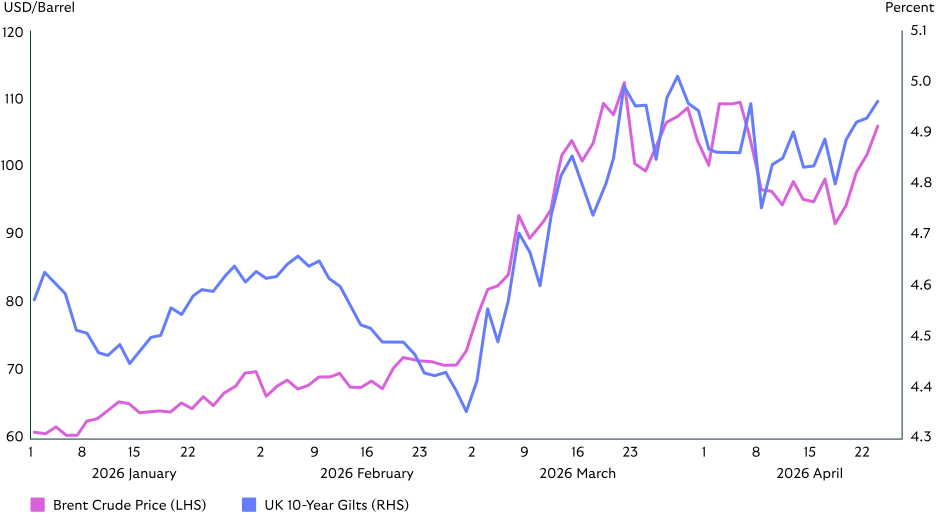
Sources: BoE, Macrobond.
What could happen from here?
While we cannot predict the outcome of conflicts in the Middle East, we hope that supply chain disruptions ease and monetary policy makers maintain vigilance over the fast-evolving situation. Similarly, we remain watchful monitoring markets for signs of further risks or new opportunities that present themselves as a result of the volatility in markets.
Key takeaways
- Causes of inflation differ from the 2022 shock.
- Inflation has a different impact on various industries and countries.
- Volatility could present opportunities as well as risks.


