


Developing financial resilience can strengthen retirement outcomes

Women have less financial room to absorb shocks
Women report lower financial security and independence than men. Just over one in three (37%) women feel financially secure, compared with 45% of men, while fewer than half (46%) feel financially independent, against 56% of men. The position is particularly difficult for young women: only around one in four (23%) women aged 18-24 feel financially secure compared to two-fifths (40%) of men, and fewer than three in 10 (29%) feel financially independent, compared with around half (51%) of men. This leaves women with less capacity to absorb unexpected costs and continue to save for long-term goals like retirement.
Nearly two-thirds of men (64%) could meet an unexpected £1,000 cost, compared with just over half (55%) of women. Among women aged 18-24, this falls to just over one in three (36%), compared with 54% of men. When unexpected costs arise, women with less financial headroom may therefore have less scope to maintain savings and pension contributions.
Women’s confidence about the future is lower too. Three in 10 (30%) women expect to maintain their standard of living in retirement, compared with 39% of men. Three in five (60%) women worry about their financial future, against 48% of men. The contrast between financial worry and confidence about retirement is particularly marked among younger women. Of those aged 18-24, more than seven in 10 (72%) worry about their financial future, and only around one-fifth (21%) expect to maintain their standard of living in retirement.
The pension gap can start early in working life
Analysis of internal Lloyds Banking Group current account data and Scottish Widows workplace pension data suggests that young women are more likely to fall outside automatic enrolment on earnings grounds and once enrolled, are more likely to remain at lower contribution rates.
Among Lloyds Banking Group customers under 30 with regular payroll income, around one in seven (14%) women earned below the £10,000 automatic-enrolment threshold, compared with 9% of men. This means a larger share of young women may miss out on automatic enrolment and the early years of pension saving and investment growth. Furthermore, women make up roughly half of Lloyds Banking Group customers under 22 with regular payroll income, but just above one-third (35%) of Scottish Widows workplace pension customers of the same age.
Differences persist even around minimum automatic enrolment contribution levels. Among Scottish Widows workplace pension customers aged 22-25, seven in 10 (71%) women had contribution rates of 10% or less, compared with almost two-thirds (64%) of men. The difference persists among those aged 26-29 (65% vs 58%) and 30-35 (59% vs 55%). Women were also less likely than men to contribute more than 15% at each of the salary levels analysed.
These patterns suggest that differences in retirement saving can become established early in working life, strengthening the case for helping young women build financial resilience and engage with their pension from the outset.
Around one in eight (12%) discussed pensions but excluded them from the settlement, and only around one in six (16%) included them through pension sharing, offsetting or both.”
Pensions are too often overlooked when relationships end
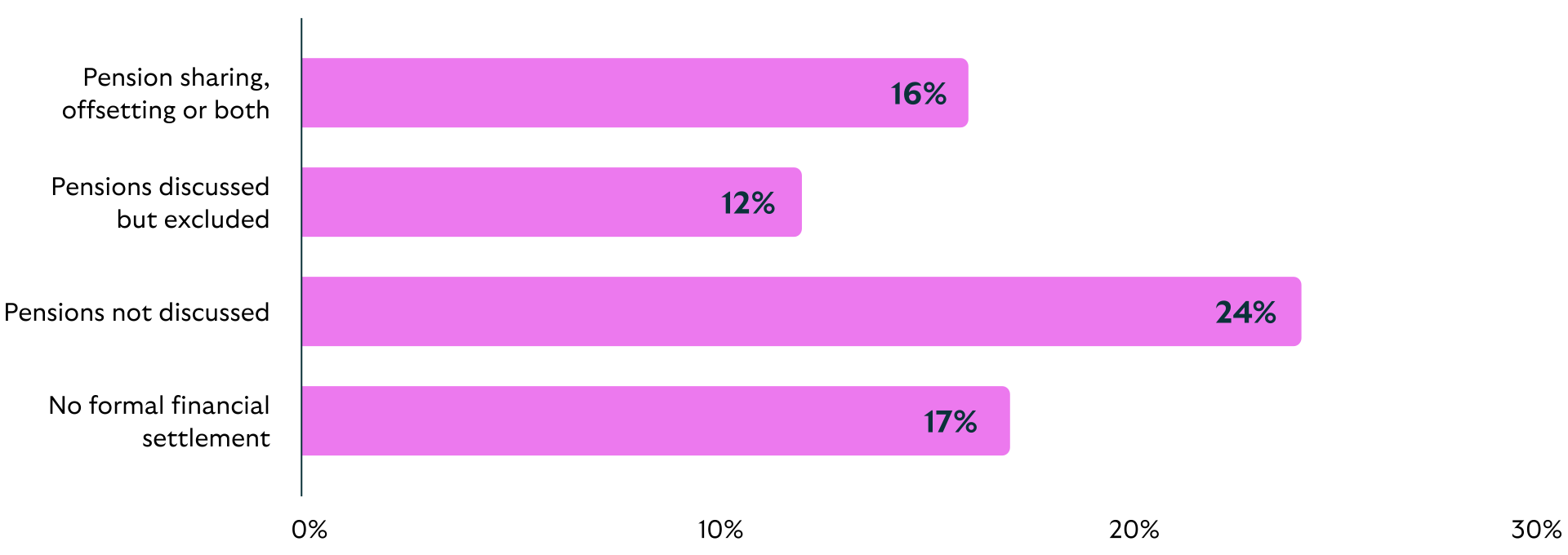
Pensions can be one of the largest assets built during a relationship, making it important that they are considered when relationships end. Yet nearly one in four (24%) divorced women say pensions were not discussed during their separation. Around one in eight (12%) discussed pensions but excluded them from the settlement, and only around one in six (16%) included them through pension sharing, offsetting or both.
Some people do not have a formal financial settlement at all. Around one in six (17%) divorced women report that they did not have a formal financial settlement, which may leave pensions outside financial discussions.
Relationship breakdown can affect both retirement preparation and current finances. One-quarter (25%) of divorced women say their retirement preparation worsened, compared with 16% of divorced men. Separately, almost one-fifth (18%) of women say a divorce, separation or break-up left them financially worse off, rising to 28% among women aged 55-64. The timing matters because women affected later in working life have less time to rebuild their savings.
Pensions were absent from many divorce settlements
People who have divorced or dissolved a civil partnership.
Note: “Neither person had pension savings”; “settlement not yet finalised”; “Don’t know / Can’t remember”; and “Prefer not to say” are not displayed.
Clear information matters when circumstances change
Early differences in pension saving can be compounded when work and family circumstances change. At these points, clear information can help women understand the longer-term consequences of decisions about work. Among women who reported a career change linked to care, menopause or divorce, around half (47%) said they had a limited understanding of the likely effect on their pension savings beforehand.
Retirement planning tools can give women a clearer view of how career changes might affect their pensions. Around one in seven (14%) women find retirement calculators helpful for planning, while around one in 10 (9%) mentioned AI and a similar proportion (8%) their pension provider’s app. Around 4 in 10 (38%) women who found these tools helpful expected to maintain their standard of living in retirement. This compares with fewer than 3 in 10 (26%) women who use no tools. The gap is wider among women aged 18–34 (38% versus 18%).
At life’s more complex moments, financial advice can help women navigate important family decisions, ensuring their needs, concerns and long-term goals are heard and reflected in wider family planning. This can support more informed decisions and help women achieve better retirement outcomes.
Supportive partners can make a difference to women's retirement outlook
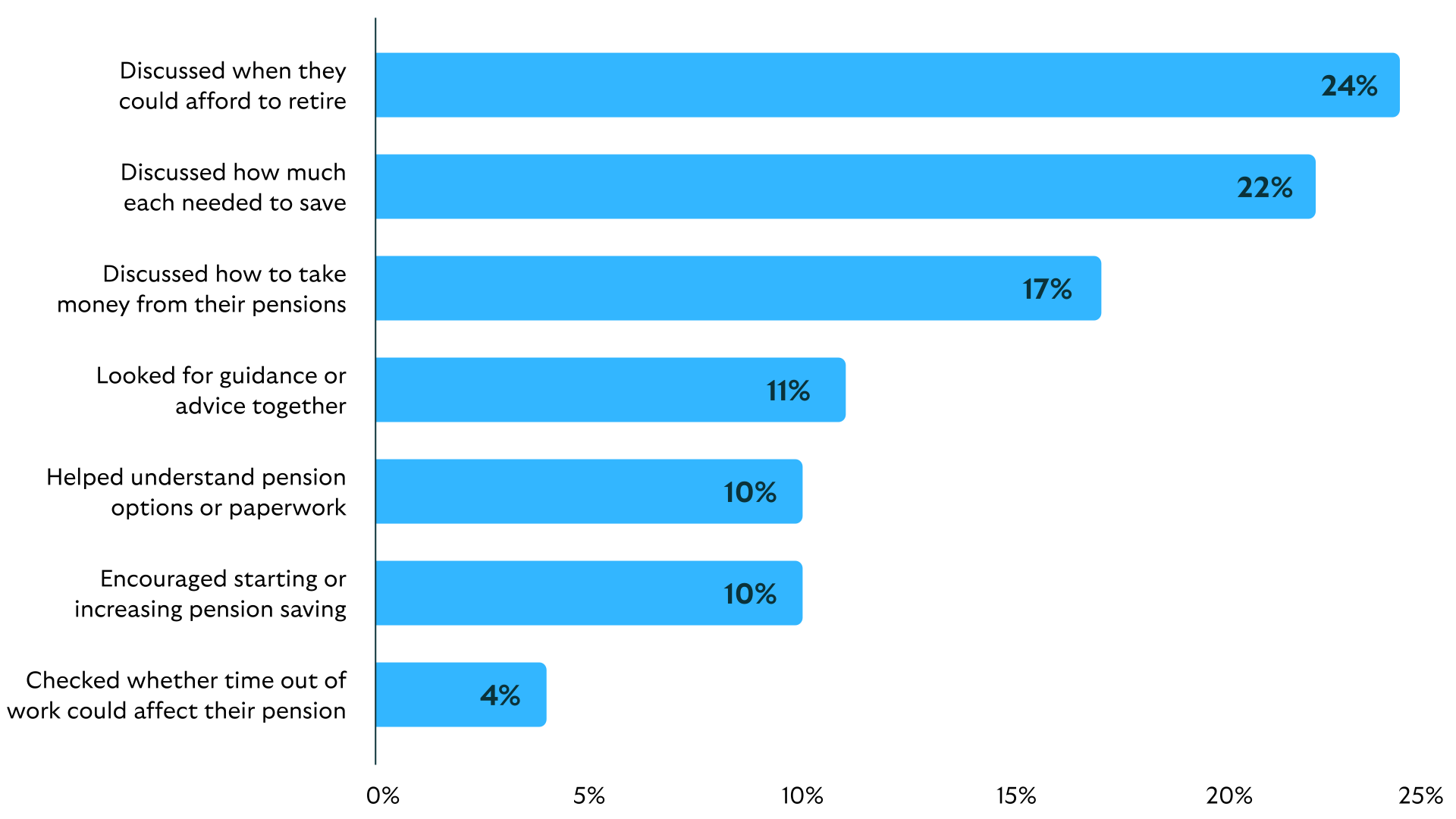
Men can play an important role as allies in women’s retirement planning, helping to make it a shared task. Our Retirement Report 2026 survey found that over two-fifths (42%) of women in relationships had received support from their partner with planning and saving for retirement. Around one in four (24%) had discussed when they could afford to retire, more than one in 5 (22%) how much each needed to save, and around one in 6 (17%) how they would take money from their pensions. More practical forms of support were less common. Only around one in 10 had sought guidance or advice together (11%), received help understanding pension options or paperwork (10%), or been encouraged by their partner to save (10%).
How partners support women's retirement security
All women in relationships.
Note: Multiple responses possible, so categories overlap. ‘Other support’, ‘No partner support’ and ‘do not know’ are not displayed.
These conversations give partners an opportunity to be active allies in women’s retirement planning. Feeling supported by a partner in retirement saving is associated with greater confidence in managing retirement savings. Among women in relationships, more than six in 10 (65%) of those who feel supported by their partner are confident in managing their retirement savings, compared with around one-third (34%) of those who feel unsupported.
Further, women living with a partner who share a clear understanding of how they will fund retirement are more likely to believe they will maintain their standard of living in retirement (54%), compared to those who do not (14%).
Importantly, planning together doesn’t have to mean giving up financial independence. More than two-fifths (44%) of women think it is important to keep some money private from a partner, compared with 31% of men. Partners can support women’s retirement planning by having open conversations about their shared future, while respecting each other’s financial independence and control over their own pensions.


Chart Your Future
Financial education is the first step to boosting financial resilience. Scottish Widows has created a suite of games and digital content in its app and on its website designed to engage people who aren’t sure what their next step is.
The latest game, designed to coincide with this report, is called ‘Chart Your Future’ and helps people understand where they are today in their future financial planning and what could help them move forward, with six simple questions leading to relevant next steps, tools and products.


