


Taking a closer look at AI

AI is one part of the wider technology picture, and we have taken a deeper look. Understanding how people currently use AI, how comfortable they are with it and what concerns they have helps show what role AI could play in pension support, both now and in the future.
Low trust and fears over accuracy currently limit AI’s role in pensions
Almost half of UK adults (44%) say they would not trust AI tools, such as chatbots or virtual assistants, for their pension. A further quarter (26%) do not know if they would trust AI tools. Just one in five of those that would trust AI, say they would most trust technology firms that don’t specialise in finance, while four in five said that they most trust either their pension provider or firms that already offer financial guidance or advice. Low trust In AI tools, especially for those provided by technology firms, may partly reflect wider uncertainty about whether AI-based pension services are subject to sufficiently clear regulation and consumer protections. For the third (30%) of people who would trust AI tools, the level of trust is similar regardless of whether they are provided by employers, pension providers, price comparison websites or financial advice firms.
The main concerns about AI tools are accuracy and data protection. Nearly half (48%) worry that AI could give wrong or unsuitable advice, while more than two-fifths (43%) are concerned that their personal data might not be kept safe. This helps explain why three-fifths (60%) of people remain unwilling to share data with AI-driven tools, even if doing so could lead to more tailored pension guidance.
The findings point to a clear condition for adoption: AI-enabled support will only be useful at scale if people trust both the tool and the organisation standing behind it.
Concerns over personal data and wrong or unsuitable advice remain
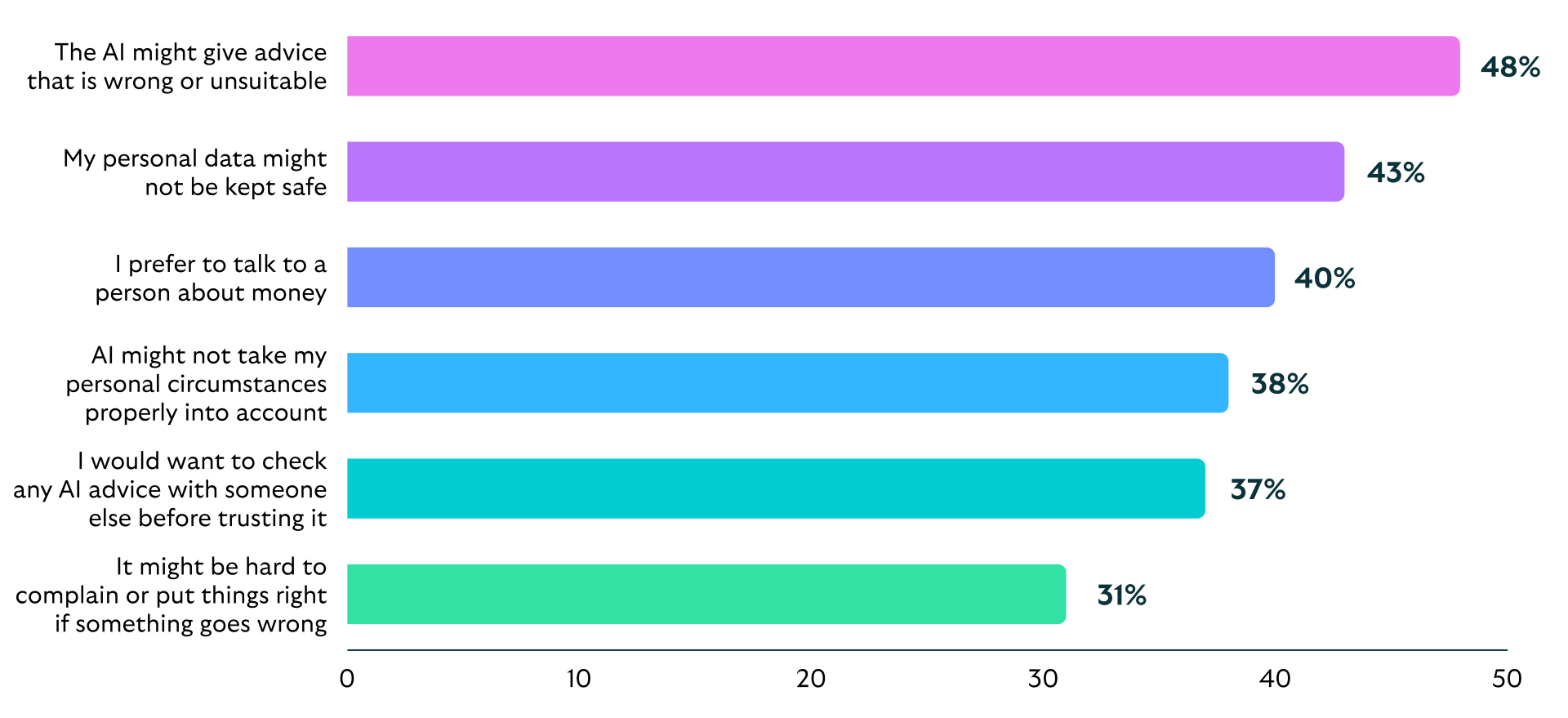
Almost half of UK adults (44%) say they would not trust AI tools, such as chatbots or virtual assistants, for their pension.”
Younger adults, especially young men, are most likely to use AI for financial tasks
Most UK adults (89%) have heard of AI tools. However, there is a large difference between those that know about AI tools and those that use them regularly. Less than half (45%) of UK adults have used them in their day-to-day lives. For those who do use AI, frequent uses include learning new things, home tasks or hobbies. AI use is strongly linked to age. Perhaps unsurprisingly, younger adults are much more likely to have used AI tools, including for financial tasks, while older adults are more likely to have heard of AI but never used it.
Around 15% of 18 to 29-year-olds say they have used AI for financial tasks, compared with just 2% of those aged 65 and over. This suggests AI’s role in pension support may grow over time as younger, more digitally confident groups move closer to retirement.
There are modest differences between men and women: 10% of men have used AI for financial tasks compared with 6% of women. However, there is a prominent gap between younger men and women: nearly a quarter (24%) of 18 to 24-year-old men say they have used AI for financial tasks, compared with just 7% of women aged 18 to 24.
AI use for financial tasks falls sharply with age
AI feels safer for simpler pension tasks
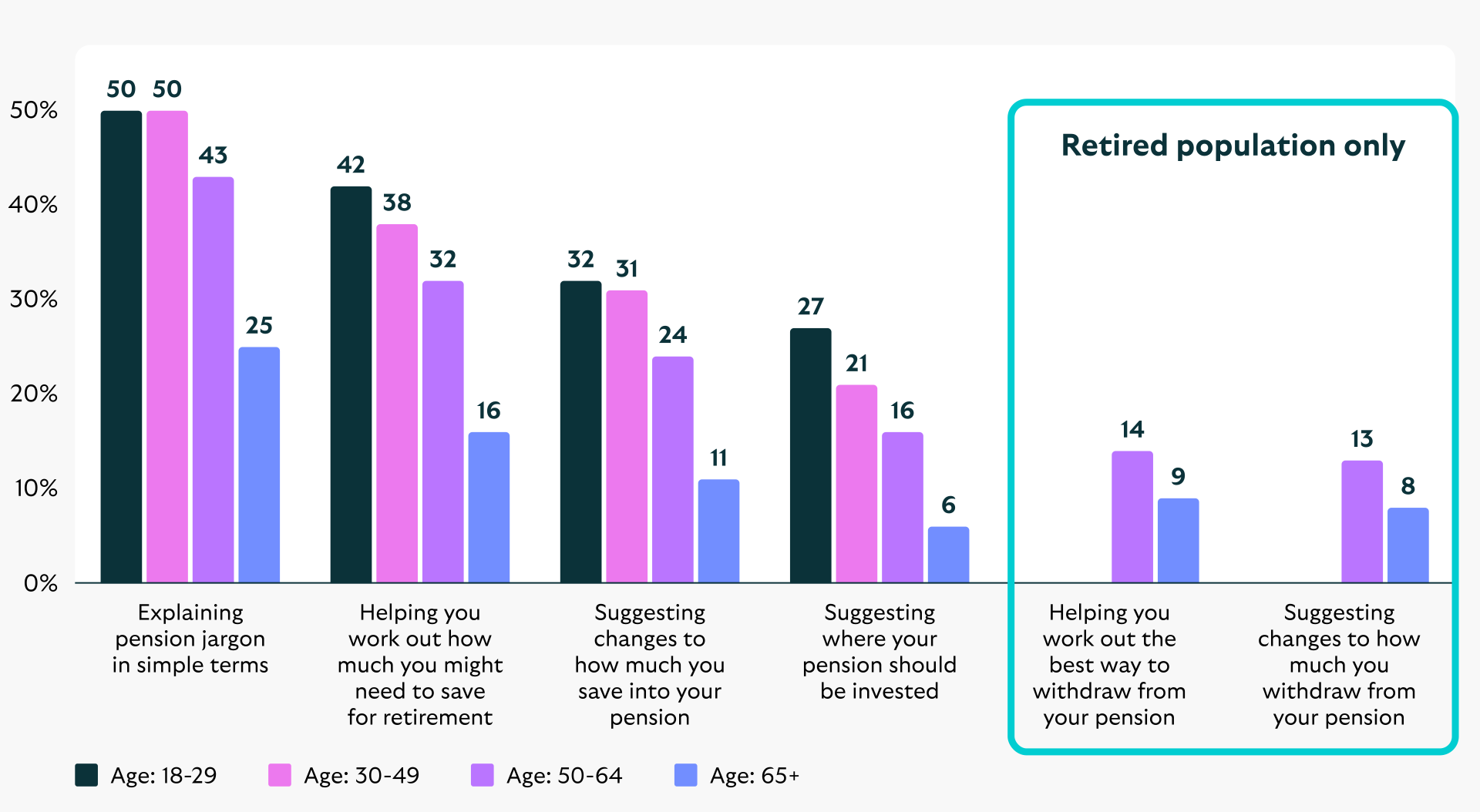
A substantial proportion of adults say they would be comfortable using AI for simpler pension tasks. For example, two-fifths (42%) say they would use AI to explain pension jargon. But comfort falls as the task becomes more complex or consequential, with only around a quarter being comfortable with suggestions on how much to save or where to save.
This is particularly clear among older adults. Among retirees, fewer than 10% say they would be comfortable with AI suggesting how much to withdraw from their pension, and only around one in ten are comfortable with AI helping them work out the best way to withdraw.
This distinction is important. AI may be most trusted initially where it helps people understand information, ask better questions or prepare for a conversation with a provider, guidance service or adviser. People are less comfortable when AI appears to make or strongly shape high-stakes decisions.
Percentage of adults stating they would be comfortable using AI for a task varies by task and by age
Regulated and unregulated AI services
As AI tools become more widely used, consumers will need to understand the difference between regulated and unregulated support. This matters because it affects the protections available if something goes wrong.
Where support is provided by a regulated financial services firm, consumers may have access to complaints and redress routes, including the Financial Ombudsman Service and, where eligible, the Financial Services Compensation Scheme if an authorised firm fails.
Unregulated AI services are different. If someone uses a general-purpose AI tool or unregulated advisory service for pension decisions and suffers harm, for example through unsuitable choices, inaccurate information or financial loss, they may not have the same protections. In an era of rapid technological change, the boundary between regulated and unregulated activity is becoming more complex.
This is a major policy issue. If consumers increasingly use unregulated tools for financial decisions, unsuitable or inaccurate services could cause harm without clear accountability or redress. Policymakers should therefore consider whether the regulatory perimeter remains fit for purpose as AI-enabled support becomes more common.


