


A resilient yet cautious investor base

Despite a challenging economic backdrop in 2025, UK investors are demonstrating financial resilience by signalling a strong intent to invest. Their confidence for their long-term goals remains high, and many are optimistically looking to increase their investments over the next year; though some are taking a more measured approach. This is symbolising an investor landscape that is both ambitious, yet vigilant.
Advised investors are displaying even stronger conviction: three-quarters (74%) plan to increase contributions over the next year, compared to just half (50%) of non-advised investors.
Investing activity now and in the future
Nearly half of investors surveyed said they had increased the amount they invested over the past 12 months, with the average amount invested sitting at £20,868. Contributions are notably higher among those aged over 55 (£22,635) and men (£23,752 vs £17,978 for women), reflecting generational and gender-based investment gaps that advisers must continue to account for.
Recent activity also shows a mixture of confidence and caution:
Looking ahead, this momentum is expected to continue. Nearly two-thirds (62%) plan to increase investing over the next year, while only 8% expect to decrease the amount they invest. Older investors remain more conservative in their growth intentions, but continue to deploy capital in higher amounts; often upwards of £2,000 – underscoring a long-term mindset and financial capacity.
Advised investors intend to add significantly higher amounts on average, around £38,983 vs £25,908 for non-advised, highlighting deeper investable capacity and long-term strategy among advised groups.
Where are investors holding their money?
Motivations behind investing decision-making
People’s investment decisions are being shaped by a combination of economic conditions, personal goals, and, naturally, emotional behaviours. Nearly all investors have been highly attuned to macro-economic factors, whether inflation, central bank policy or geopolitical shifts.
Key drivers that have influenced people’s investing behaviour include:
Specifically for those who have been increasing their investment contributions, long-term planning is a core motivation behind their decision-making (67%), while nearly half (47%) are driven by an expectation of returns. Two in five (43%) noted adviser guidance being the driving force behind their decisions. Among advised investors planning to increase contributions, advice itself is the single biggest influence (60%), reinforcing the value of trusted expertise in decision-making.
Behavioural influences remain significant: while over half (56%) say they always do their research and 47% claim to make rational decisions, 16% admit to knee-jerk reactions and 15% acknowledge letting emotions affect their investment choices.
Advised investors are more disciplined as two-thirds (66%) say their decisions are thoroughly researched vs 46% of non-advised investors, and only 10% of non-advised investors admit emotional decision-making compared to 20% of advised, highlighting different behavioural drivers.
When it comes to market behaviour and the news cycle – there’s a notable trend. Most investors look to the headlines for guidance, as almost three in five (58%) said the news was a big influence in their decision making. Others are more reactionary, taking action when their portfolios fall (57%) with some even seeing market corrections as a key opportunity to buy stocks – highlighting both vulnerability and opportunity in investor behaviour.
As people continue to invest into retirement, their goals are shifting from pure growth strategies towards sustainable income, capital preservation, and carefully managed risk. The challenge, and opportunity, for advisers is helping clients strike the right balance between generating reliable income, while maintaining enough long-term growth to support potentially decades-long retirement journeys.
Confidence vs behaviour: Room for adviser support
Investors overwhelmingly are assured about their financial future, but their self-confidence doesn’t always align with execution. While three in four (75%) investors are confident in funding their retirement, and a similar number (77%) in achieving portfolio growth, this confidence drops to 61% without adviser support – highlighting the critical role of advice in converting confidence into outcomes.
Confidence in retirement funding rises from 68% among non-advised, to 82% for advised investors.
Some 17% of investors admitted to making mistakes in the past year, with common pitfalls including:
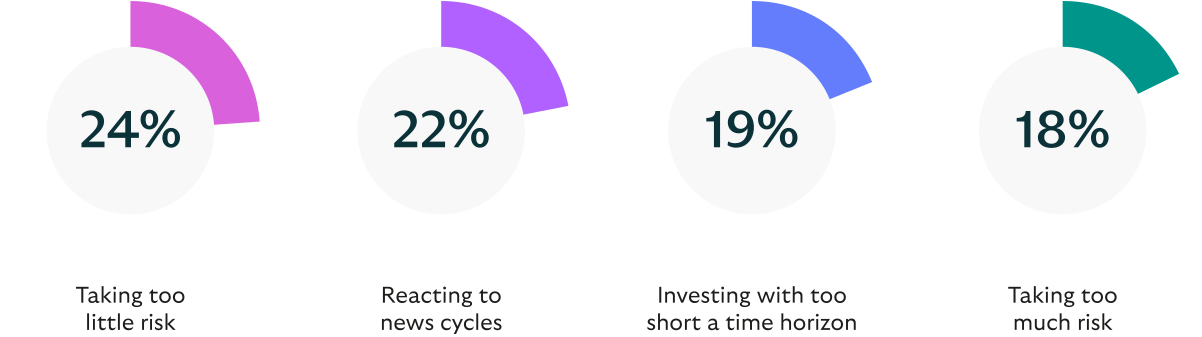
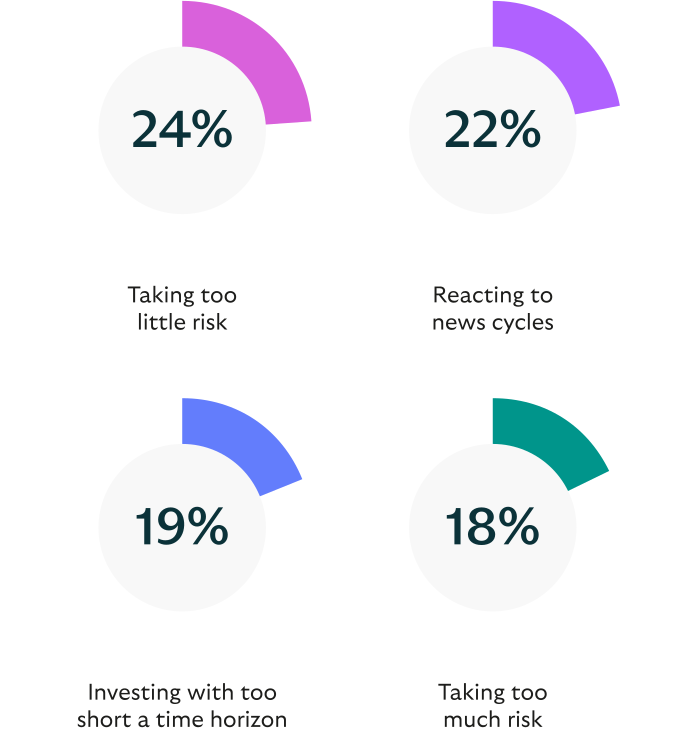
For most, this represents a fine balance between caution and conviction. Too little risk could hinder growth, just as too much can create volatility. Advised investors are also less likely to react emotionally to markets and only 13% say they’ve reacted to headlines vs 22% of non-advised.
Therein lies the very value of advice.
Non-advised investors tend to over-allocate to cash, display lower confidence, and are more likely to react emotionally to news headlines. This is where advisers play an integral role that can be invaluable. Advisers enforce long-term discipline, help build resilient and diversified portfolios, and ensure clients maintain focus on their ultimate goals, regardless of the short-term news cycle.
Investing into retirement
Retirement is no longer seen as the ‘finish line’, but rather a transition into a new phase of investment. More than four in five (82%) of investors surveyed said they planned to continue their investing journeys into retirement, rising to 90% of advised investors, shifting focus from growth to sustainable income.
As investors move into retirement, the drivers for continued investment vary. More than half (57%) expect to focus on generating income from their investments, reflecting a need for reliable cashflow later in life. Meanwhile, just under half (47%) plan to increase their exposure to fixed-income assets, as others (44%) seek to reduce their overall risk profile. Just a small minority – around one in ten – said they had no plans to change their investment approach in retirement.
Life-stage-based advice, and timely client touchpoints will also be critical, particularly as many continue their investment journeys well into retirement. This will mean ensuring the right products and solutions are visible at the point of need, whether income-smoothing solutions for later in life investing, or clear growth-paths for those seeking opportunities.
To support this crucial shift to life-stage and retirement planning, the Scottish Widows Platform provides advisers with flexibility and control over client strategies. The platform allows for seamless integration of investment and withdrawal methods, including targeted or proportional selling, to deliver sustainable income and manage volatility, ensuring that client needs stay front of mind.


