Profession under pressure

Behind the confidence of investors sits an advice profession often feeling the weight of complexity. Advisers, and paraplanners, are managing mounting regulation, capacity constraints, and a fast-approaching wave of technological change – all while maintaining the trust and reassurance their clients depend on.
Macro investment outlook, concerns, and client impacts
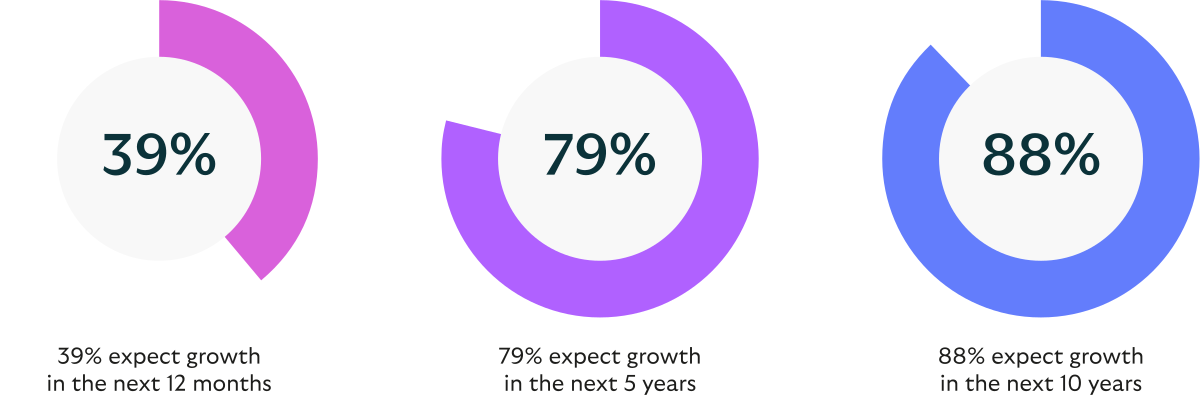
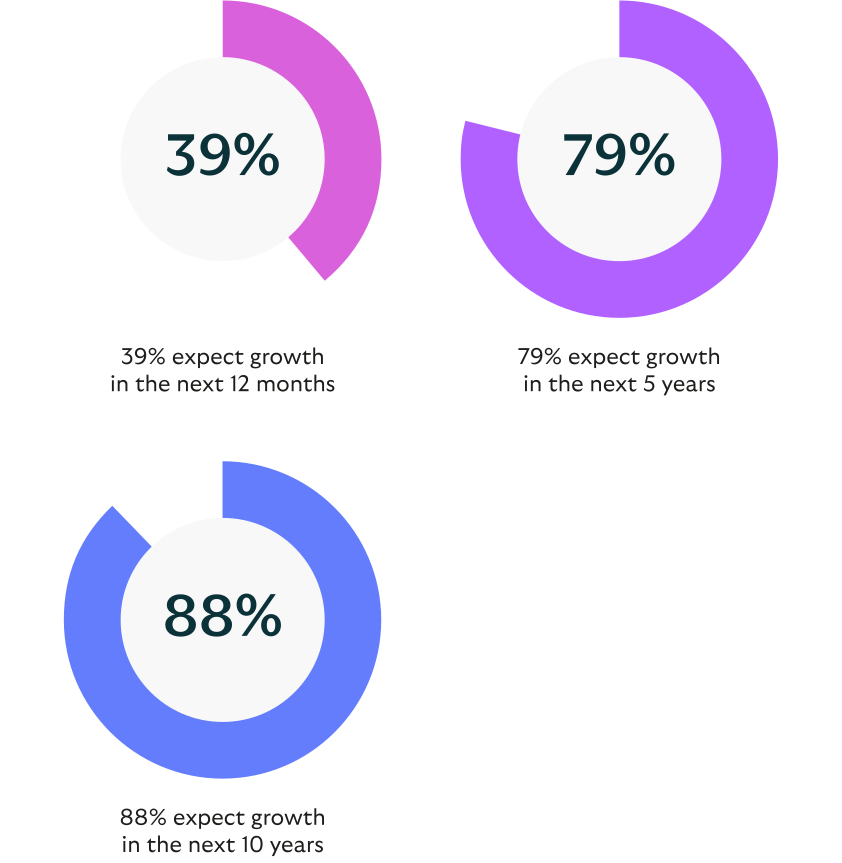
Our research shows advisers are primarily concerned with macro-level risks – geopolitics, global trade, and their resulting impact on their clients and their clients’ investments. When it comes to the crucial element of ‘equity growth’, they remain positive.
In their day-to-day work, advisers are grappling with several challenges but perhaps most notably, the complexity of IHT changes. Our findings show advisers are employing a range of strategies to help clients navigate the disruption the change could impose on their wealth and legacy planning.
The global environment is also having a tangible impact on advisers’ interactions with clients – beyond just coming up in conversation. Almost two in five advisers (37%) say that UK domestic political changes have seen them change the advice or recommendations given to a client, with the same experience reported for Trump’s tariffs (34%) and global trade disputes (22%).
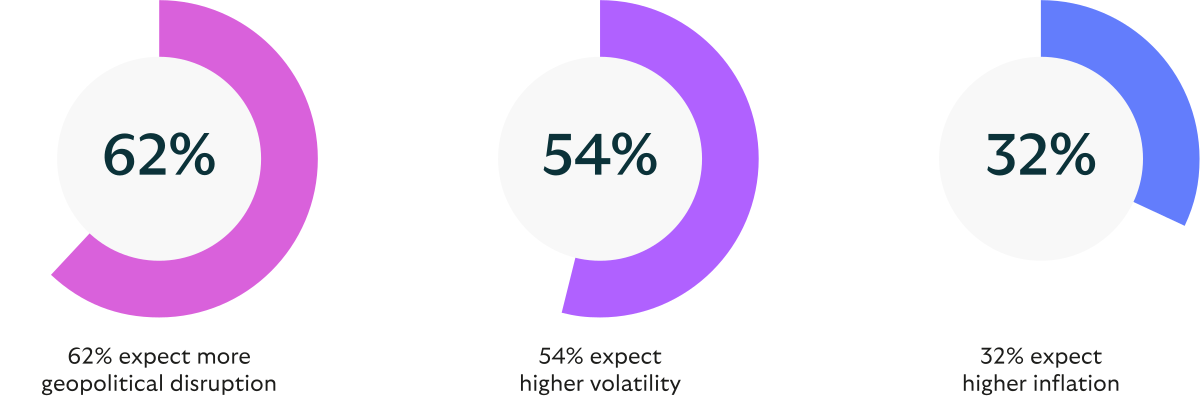
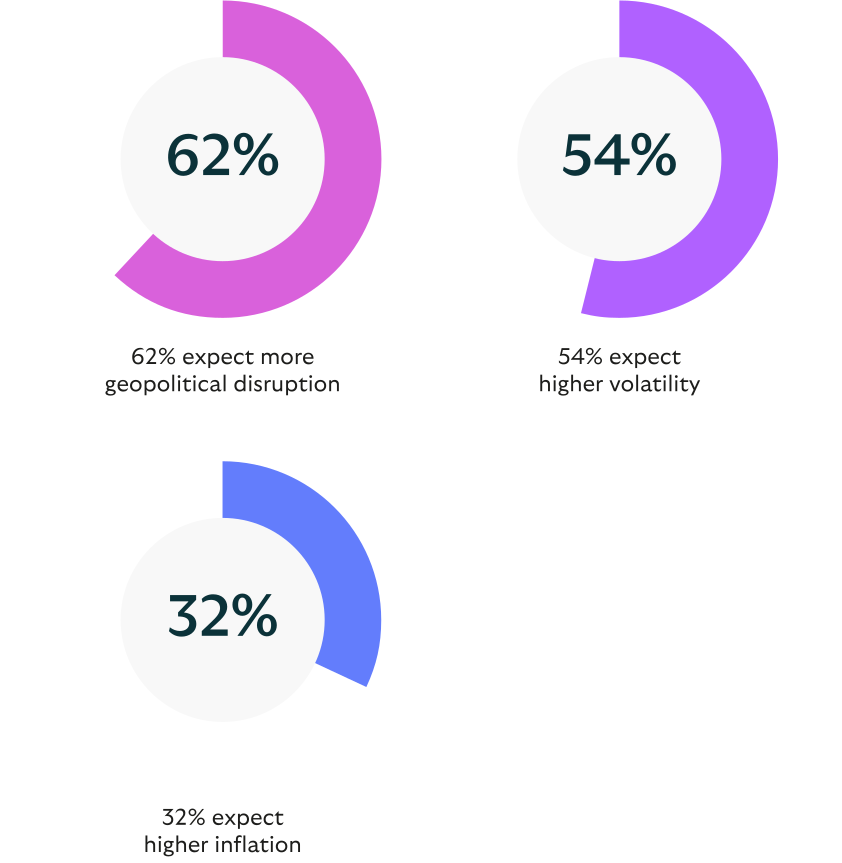
Looking to the future, the consensus is that the world is unlikely to slow down. Almost two thirds (62%) of advisers expect more geopolitical disruption, 54% higher volatility, and 32% higher inflation over the next five years.
Top concerns:
Adviser five year outlook
Adviser equity expectations
Inheritance Tax (IHT)
Significant IHT changes were announced in 2024, and with little time to prepare only half (52%) of advisers say they feel ready for the changes in 2027. Asked about their clients’ main challenges, three quarters (74%) include complex tax rules. Drilling into the strategies to mitigate these changes, we find a range of options being used – lifetime gifting (55%), reviewing retirement income/spend (51%), earlier drawdown of pension assets (49%), earlier family conversations (48%), as well as the use of trusts and onshore bonds (37%). With regulatory change unlikely to abate, this is likely a sign of things to come.
Paraplanner view
Paraplanners echo advisers’ concerns, emphasising the day-to-day strain of interpreting and applying frequent tax and policy changes. It is typically their role within the planning eco-system to carry the technical burden, manage the modelling and suitability documentation behind estate planning strategies. They are the most exposed to the intricacies of IHT complexity, tax rule volatility, and ensuring that their adviser counterparts are able to deliver the best advice to their clients.
Pressures, capacity & client demand
While their experience is slightly different, advisers and paraplanners are both facing significant operational and personal strain due to regulatory changes.
As many as 78% of advisers say recent regulatory and tax policy changes have had a negative impact on the cost of doing business, and 85% have seen their workloads negatively impacted.
It is a significant worry that almost two in five (39%) of advisers report that these pressures have had a negative impact on their mental health. With nearly one in three (30%) advisers expecting they will be managing between 120–200 clients per adviser in five years’ time, combined with younger generations expecting a faster, more digital service, the industry must look at how to mitigate these pressures to avoid an adviser exodus.
Paraplanner view
Paraplanners have also framed regulatory pressure as a significant capacity bottleneck – the detail of Consumer Duty, recordkeeping, and suitability checks often lands on them. Workloads are rising for over nine in ten (94%), and over four in five (85%) say that frequent changes to tax policy and allowances are increasingly affecting their business processes. Despite this, yet more responsibilities are being placed on their shoulders – notably, Targeted Support changes that will likely not just expand their workload but will be done without a clear definition of responsibilities.
Scottish Widows rolled out a series of platform updates over the last 18 months as part of an on-going transformation of the Intermediary Platform focussed on enhanced platform functionality and service.
Recent updates include:
- Dripfeed drawdown: Digital functionality to help clients take regular income from their pension in a tax efficient manner
- Bed & ISA: One stop digital journey to sell investments within a client’s GIA and use the proceeds, or cash within the GIA, to top-up an existing ISA.
- User experience upgrades: Multiple journey and reporting enhancements delivered across numerous digital releases.
- Simplified charges: Easier to understand charges information and removal of platform charge on cash held outside model portfolios.
- Improved integrations: New back office and tool integrations, including Oxford Risk’s Investor Compass.
- Managed Growth Funds: Five risk-profiled multi-asset funds, delivering a value for money solution to help you deliver great outcomes for clients.
To find out more, read our press release or visit our platform updates webpage.
With a heightened workload and greater demand for speed, utilising the benefits of AI could soon develop into a key part of the solution. While there may be some hesitancy, easing some of the administrative burden that comes with regulatory change could significantly free up advisers to spend more time with their clients.
There are other steps the industry can take that would also help. A drive toward process simplification could slash the time lost by advisers and paraplanners, ensuring those platforms that are relied upon use every day are streamlined, agile, and reliable. This spans back-office integrations, tool integrations, and client reporting efficiencies, all of which feed into creating platforms that are highly-connected and ease the process of doing business.