


Silver, AI and next-generation demand


Ned Naylor-Leyland, Chris Mahoney and Joe Lunn discuss silver mine supply and demand dynamics, and the potential impact of the AI infrastructure buildout on the white metal.
Silver has two important functions that drive demand: it is a monetary metal that trades as foreign exchange, and it is a key industrial metal. While gold has been used as money historically and has some important uses as a raw material, silver, the white metal, is more critical to industry.
A little over half of the silver produced goes to industrial use. We have written before about the ongoing structural shortage of silver, and in our view, this supply imbalance makes silver especially interesting for investors.
For the last six years, demand for silver has outstripped mine supply; the cumulative deficit of around 24,000 tons leaves the silver market “vulnerable to elevated bursts of reduced liquidity, volatile prices, premiums and lease rates,” according to the Silver Institute1.
Mine production of silver increased by 3% last year, while industrial demand declined by 2% due to a reduction in solar-cell output, according to the institute. Even so, overall demand for silver still outpaced mine supply2.
Industrial Demand for Silver, 2014-2024
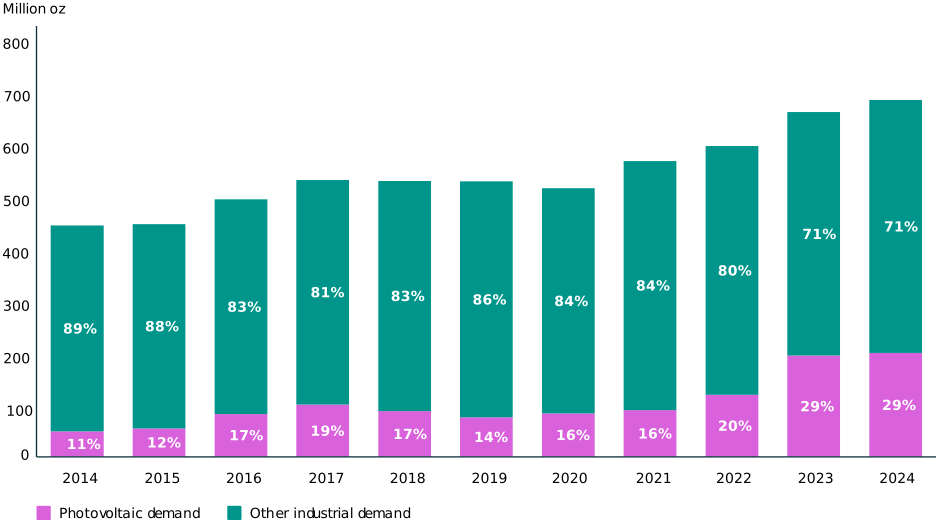
Source: World Silver Survey, Oxford Economics, “Silver the next generation metal.” 9.12.25.
Silver is used in virtually every electric and electronic device from light switches to mobile phones, as well as in medicine to fight infections and in water-purification systems.”
Silver in your phone
Silver is used in virtually every electric and electronic device from light switches to mobile phones, as well as in medicine to fight infections and in water-purification systems. It is prized for electrical and thermal conductivity, durability and antibacterial properties.
Technology applications – photovoltaic cells in solar-energy systems, electric vehicles and their charging points and artificial intelligence infrastructure including data centres – are expected to fuel higher demand for silver through 2030, according to an Oxford Economics study3.
The next generation
The report says that as the world continues the transition toward electrification, renewable energy, and AI adoption, silver will play a pivotal role as a “next generation metal.”
We find the demand related to AI and data centres most interesting due to the huge scale of planned growth over the next five to 10 years. For this year alone, Amazon, Meta, Microsoft and Alphabet have announced plans to increase their AI infrastructure spending to $745bn from $410bn last year4.
The US currently has 2,056 data centres, more than any other country, with around 4,000 additional sites planned or announced and 809 under construction, according to data provider Aterio5.
Hardware and electricity
Silver is critical to AI and data centre-related infrastructure. Inside these sites, silver is used in the compute hardware, power management, cooling infrastructure and networking. Outside, silver is critical to the power supply: electricity generation, transmission and distribution.
Data centres are large consumers of water and electricity. The International Energy Agency expects data-centre electricity demand to roughly double over the coming decade, with America’s data centres projected to use 9.3% of the country’s power by 2030, against 2.9% in Europe and 2.3% in China6.
In our view, the financial capital required for planned AI/data centre buildout can be found, as can the electricity, via new energy projects and imports. Similarly, the development of new mines can boost the supply of copper over the long-term – copper demand has surged due to data centre demand.
In our view, most long-only investors remain under-allocated to monetary metals and to gold and silver miners.”
Will silver constrain AI?
Silver mine supply cannot be meaningfully increased, however, and in our view, silver may be the biggest potential constraint to future AI/data centre expansion. We believe that planned AI/data centre construction, if it gets close to what is projected, could result in record silver deficits.
Last November, the US added silver to its critical minerals list, which guides government strategies to secure mineral supply chains.
Silver mining companies – and gold mining companies – have been undertaking mergers and acquisitions in recent years to acquire additional resources. These companies have become more profitable over the last few years as metal prices have risen and yet they have been mostly ignored by long-only investors. One indicator of that is silver miners we monitor trade on average at a price that is 1.26-times their net asset value, which is well below the valuation they had in 20187. In our view, most long-only investors remain under-allocated to monetary metals and to gold and silver miners.
Active vs passive
We think it’s important to be selective if choosing to invest in silver or gold miners as they can be risky and operationally complex businesses. Silver supply-and-demand dynamics can be volatile and affected by macroeconomic and geopolitical events. Likewise, the paths of interest rates and inflation are difficult to forecast, and both are important indicators for the direction of silver and gold prices.
We believe an active investment approach is valuable in managing the risks around monetary metals. We are staying patient and positive about the outlook for these assets. We believe that silver and gold and gold and silver mining equities can play an important role in a well-diversified investment portfolio.
1Silver Institute, World Silver Survey. 15.4.26
2Silver Institute, World Silver Survey. 15.4.26
3“Silver, The Next Generation Metal,” 9.12.25, Oxford Economics for the Silver Institute
4Financial Times, 31.7. https://www.aterio.io/insights/us-data-centers
5Aterio. 8.7.26.
6International Energy Agency data-centre electricity projections, cited in Mizuho Securities Equity Research, June 2026.
7Source: Jupiter as at 1.6.2026


