Other key findings
How do paraplanners feel about platform engagement?
Paraplanners mostly use two or three platforms with only 30% of those surveyed using four or greater. A 70% majority of paraplanners are happy with the way in which platforms engage with them, with this proportion increasing to 74% for those who use three of fewer platforms. And, when it comes to the areas where platform engagement matters most, paraplanners told us their priorities: fast response to enquiries, technical knowledge of support staff, easy-to-use technology and a clear charging structure.
Number of platforms used regularly
Areas where platform engagement matters most
Where can paraplanners add more value?
You would expect to see some overlap between the areas in which paraplanners feel they are already adding value and where they feel they could contribute more. But the devil is in the detail and this result highlights the variation in paraplanner responsibilities among firms and the steady transition that we are still seeing as paraplanners move up the value chain. We can see, for example, 45% believe they already add value to advice recommendations yet, at the same time, 31% believe they could add more in this area.
In which of these areas do you feel you most add value to the advice process?
And where do you think you could add more value to the advice process?
How can firms be more supportive of paraplanners?
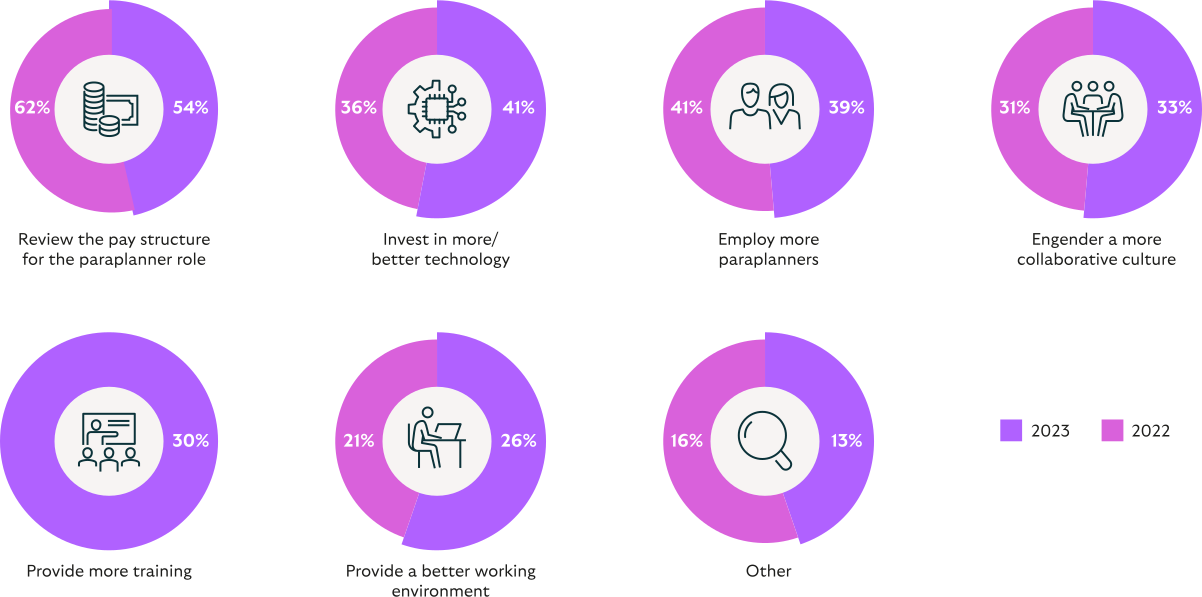
Given the economic environment we’re currently experiencing, it might be surprising, at first glance, to see a material drop in the proportion of paraplanners looking for a review of their pay structure. However, there has been some indication that demand for experienced paraplanners outstripped supply, which may have moved the needle for some paraplanners on pay. This also helps to explain the greater willingness of paraplanners to stay in the role as a career, as discussed earlier.
How could your firm/the firms you work for be more supportive of your role?
What’s stopping firms from implementing new technology?
The cost of new technology and the disruption caused when switching from legacy systems are both key barriers to implementing new technologies. More surprisingly, over 1 in 10 paraplanners feel there is no barrier at all. When we also consider the material drop in ‘identifying full benefits of new technology’, we see paraplanners as largely supporters of new technology but, as discussed earlier, they are not always involved in technology decision-making.
11% of paraplanners feel there is nothing stopping their firms from using new technologies.
What may be stopping the firms(s) you work for from using new technology?
Many respondents paired servicing the next generation of clients with the use of technology, stating that there is an opportunity to onboard a new generation of young investors centred on a more technology-driven, lower-cost advice service. This makes perfect sense when you consider roboadvice as a key competitor.
When asked if there are any specific technologies that would benefit them or their firm right now, of those paraplanners who could think of a specific technology, 46% named AI/ChatGPT. So while the longer-term impact of AI is yet to be determined, it does seem likely that, in the near future, a good number of paraplanners will be using AI and ChatGPT-like tools to do much of the heavy-lifting work associated with compiling a suitability report for example. These pioneering paraplanners could establish a new way of working as early adopters and light the way for others in the industry to follow.